
The SolutionGigs Blog
Guides, comparisons and hard-won lessons on data engineering, AI, cloud and the modern data stack — written from the trenches.
GCS vs AWS S3 vs Azure Blob Storage
Google Cloud Storage vs Amazon S3 vs Azure Blob Storage compared for data engineers: real per-GB and per-request pricing, IAM access models, archive-tier retrieval speed, and Azure's new 128 KiB minimum billable object size that can 32x a small-file bill.
Feeling Stuck in Your Developer Career? Here's What Actually Moves You Forward
Feeling stuck in your developer job and not sure what to do next? The skills that unstick a career aren't always technical. Get 1:1 help at SolutionGigs → Learn the 5 workplace survival skills that determine whether good engineering work ever gets you promoted.
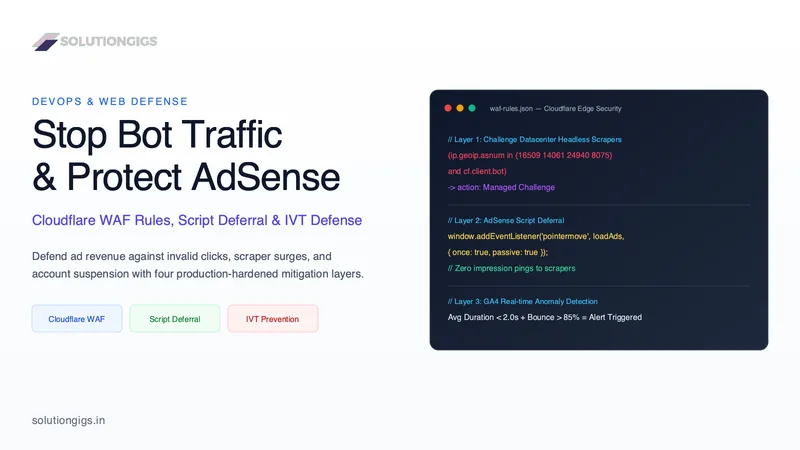
Stop Bot Traffic & Protect Your AdSense Account from Suspension
Stop bot traffic from triggering AdSense invalid traffic limits and suspension. Step-by-step Cloudflare WAF rules, script deferral, and server fixes → Learn how to identify bot signatures in GA4, challenge datacenter scrapers, defer ad scripts, and eliminate crawl traps.
Midjourney AI: How It Works, What It Costs, and Where It Stops
Midjourney AI explained for people who have to make it pay: how the V8 models work, what each plan buys in GPU hours, the prompt parameters that matter, and where it stops. With an interactive prompt builder, a plan calculator computed from Midjourney's documented per-job GPU costs, and a five-question decider that tells you whether a person-at-a-keyboard tool fits your production workflow — or whether you need an image model with an official API and a small pipeline around it.
Fix Kafka Consumer Lag and Kinesis ProvisionedThroughputExceededException in Production
Kafka consumer lag and Kinesis ProvisionedThroughputExceededException are one incident in two uniforms: a partition or shard taking in more than it can hand off. The 15-minute triage, fixes in blast-radius order, and why retries turn a slowdown into an outage. A production break-fix runbook: read the lag shape or the per-shard throttle metric, match one of four faults, then fix consumers, poll size, partition keys and retry budgets in the right order — and what to do if it is still red.
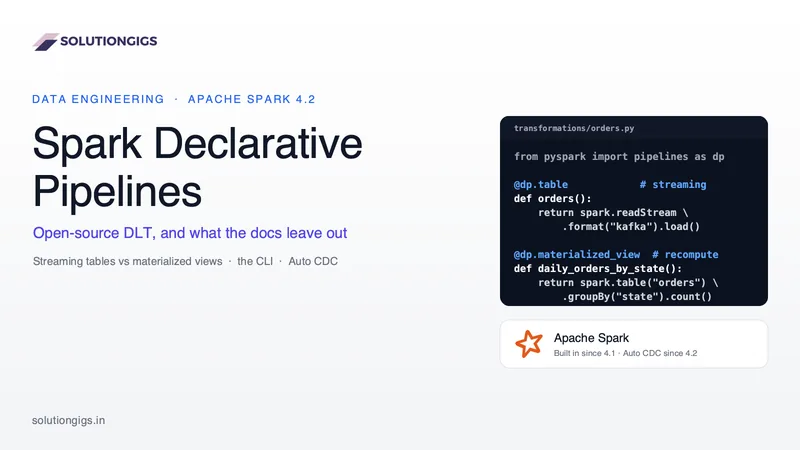
Spark Declarative Pipelines: Open-Source DLT, and What the Docs Leave Out
Spark Declarative Pipelines bring the engine behind Databricks DLT to open-source Spark 4.1+: streaming tables vs materialized views, the CLI, Spark 4.2 Auto CDC, and what stays Databricks-only. You stop writing df.write and stop owning the DAG — but a materialized view is a full recompute every run, so the dataset type you pick is a cost decision, not a syntax preference.
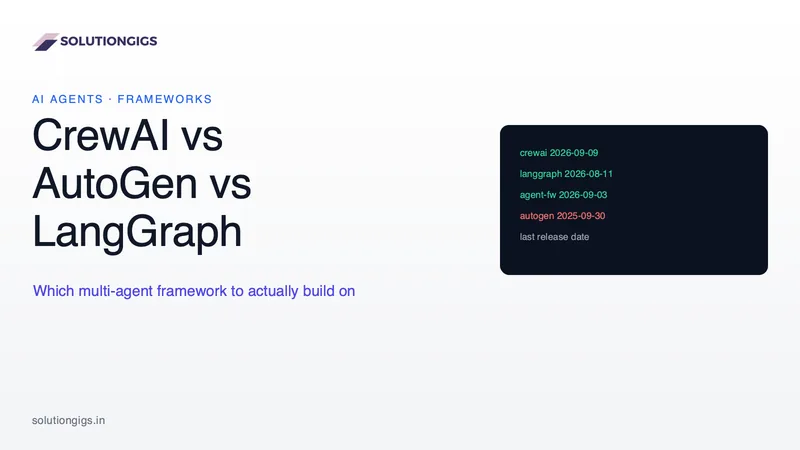
CrewAI vs AutoGen vs LangGraph: Which Multi-Agent Framework Should You Actually Use?
AutoGen is in maintenance mode and most comparison articles still miss it. We checked release dates on PyPI and GitHub, then compared CrewAI, LangGraph and Microsoft Agent Framework on architecture, failure behaviour and token cost — with a decision tree that tells you which to use, and when you need no framework at all.
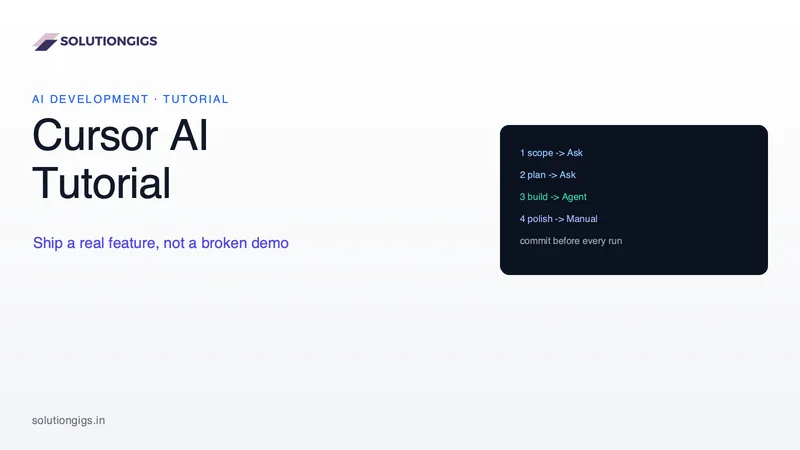
Cursor AI Tutorial: How to Ship a Real Feature, Not a Broken Demo
Most Cursor tutorials build a to-do app from an empty folder. This one covers the real job: adding a feature to a codebase that already has 40,000 lines and tests that must keep passing. The four modes and when each is correct, the rules file that removes most repetitive errors, a worked example, and how to keep costs down.
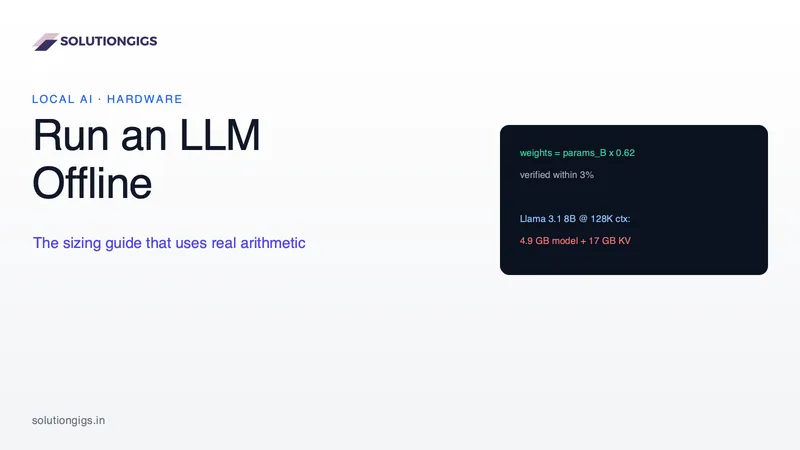
Run an LLM Offline: The Hardware Sizing Guide That Uses Real Arithmetic
Every local LLM guide hands you a lookup table that goes stale in a week. This one gives you the arithmetic instead — a weights formula verified within 3% against real model files, the KV cache maths that explains why your model slowed down mid-conversation, and a genuine offline checklist.
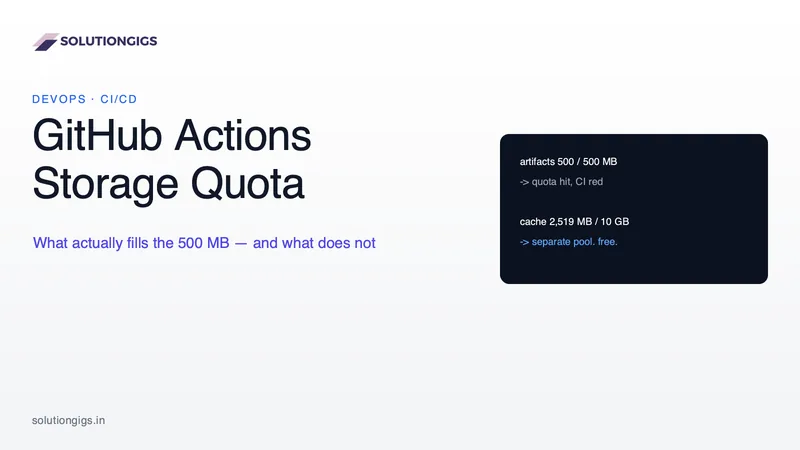
GitHub Actions Artifact Storage Quota: What Actually Fills It
Your GitHub Actions storage hit 100% and uploads are failing. Caches are not the cause — they are a separate free pool. This is a post-mortem of the 500 MB filling up on this site's own repository: the two leaks that did it, why deleting artifacts does not immediately free the quota, and the three changes that took storage to zero and kept it there.
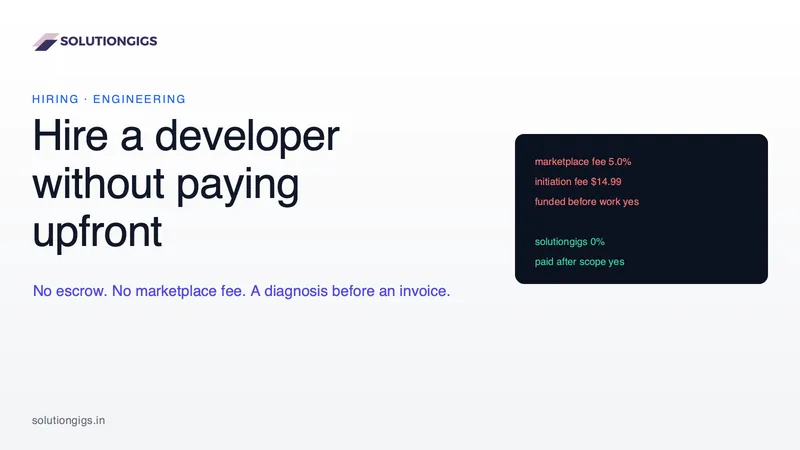
How to Hire a Developer Without Paying Upfront
Marketplace fees, escrow funded before anyone opens your problem, and six to fifteen unpaid hours screening candidates — the rate is the one cost you can see. This puts real figures on all three, explains why escrow exists and when it is right, and shows how to structure a pay-after engagement safely, including if you never hire us.
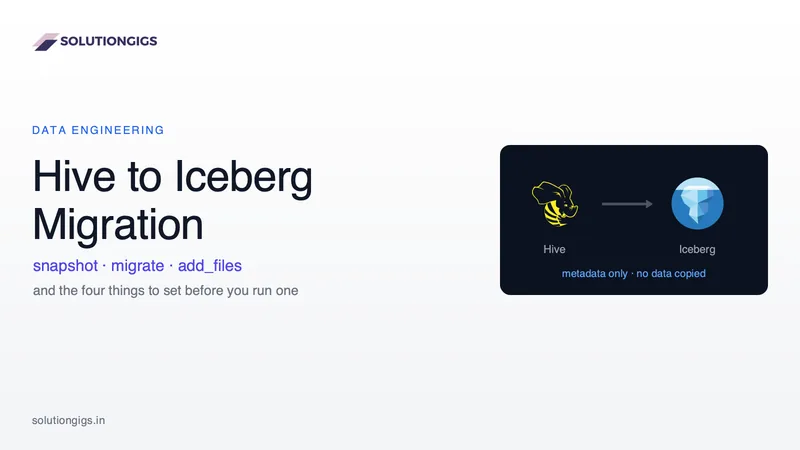
Hive to Iceberg Migration: snapshot, migrate and add_files
Iceberg's three migration procedures never copy data, which is why they are fast and why they fail silently. Here is what snapshot, migrate and add_files each do to your Hive table, the four settings to get right first, and the five ways a migration reports success while being wrong.
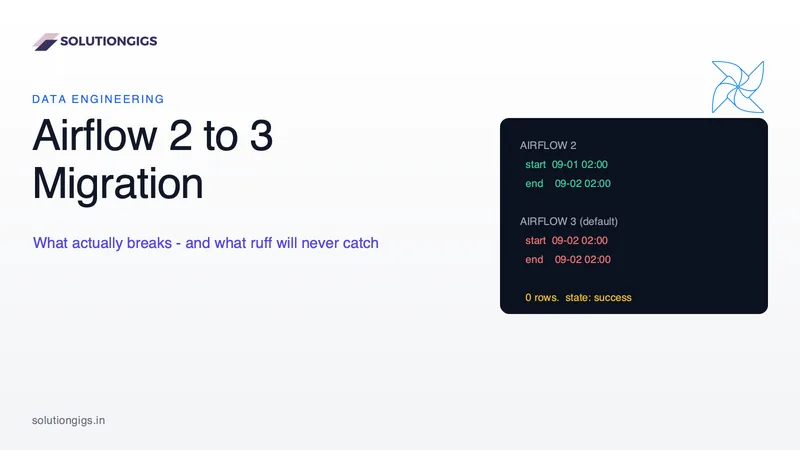
Airflow 2 to 3 Migration: What Actually Breaks
Airflow 2 reached end of life in April 2026, and the dangerous half of the Airflow 3 migration never raises an error — it collapses your data intervals and shifts every partition date by a day. Here is what ruff catches, what no linter can catch, and the full cutover runbook.
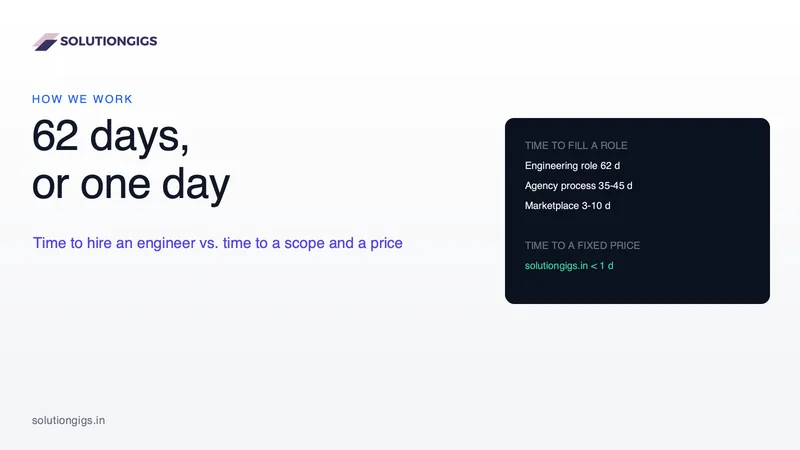
How Long It Takes to Hire a Freelance Developer — and How to Skip the Wait
Hiring an engineer averages 62 days, and almost none of them are engineering. This breaks down where the time actually goes across the job-posting, agency and marketplace routes, what the delay costs you, and exactly what happens on the /fix and /services intake pages — including what a one-day ETL does and does not buy, and what “ten times faster” honestly measures.
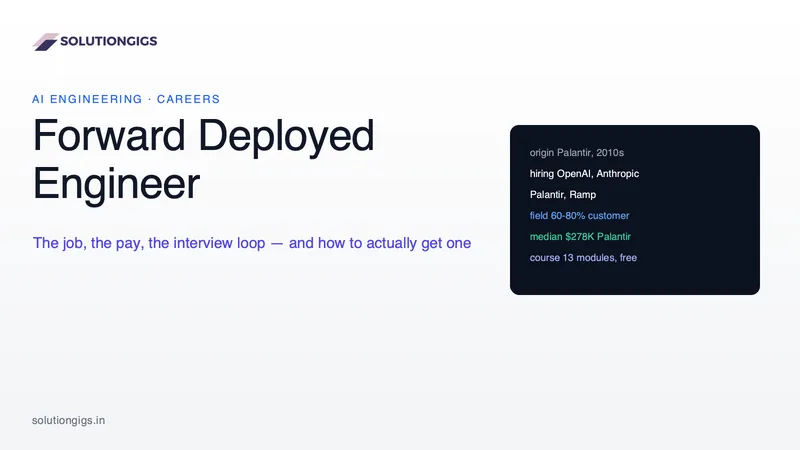
Forward Deployed Engineer: What the Job Really Is, What It Pays, and How to Get One
A forward deployed engineer is a software engineer embedded with a customer, shipping production code inside that customer's environment. This guide covers what the week actually looks like, the four deployment topologies, the security questionnaire that stalls deals, what the role pays with sources named, the five-stage interview loop, and a 90-day plan to move into it from an ordinary software job.
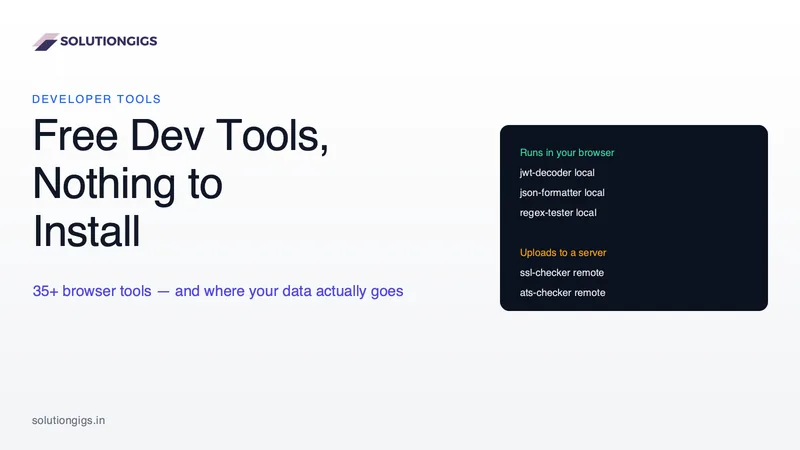
Free Developer Tools You Can Use Without Installing Anything
Most "best free developer tools" lists rank by features. The question that actually matters is where your data goes: 19 of these 63 browser tools issue zero network calls, so a production JWT or a passport photo never leaves your laptop. Here is the classification, taken from the source code, plus the 15-second offline test that settles it for any tool on the web.
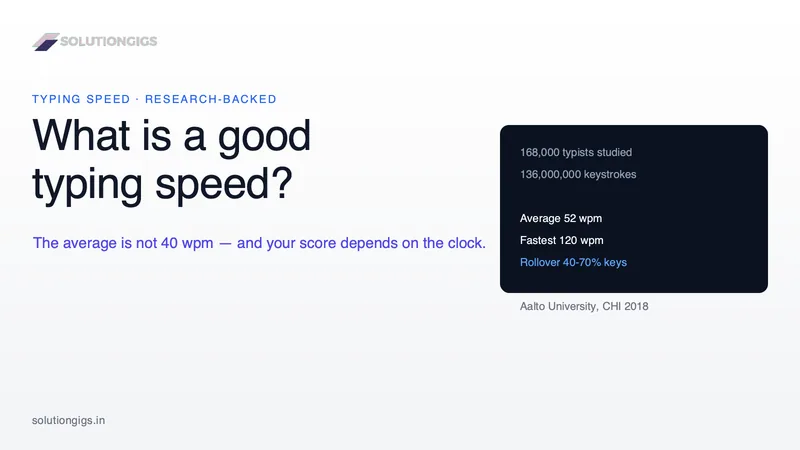
What Is a Good Typing Speed? What 136 Million Keystrokes Say
A good typing speed is 60 wpm at 95% accuracy — but the average is 52 wpm, not the 40 everyone quotes. Here is what 136 million keystrokes actually showed, why faster typists make fewer errors rather than more, and why the same person scores 8-15 wpm lower on a 10-minute test than a 1-minute one.
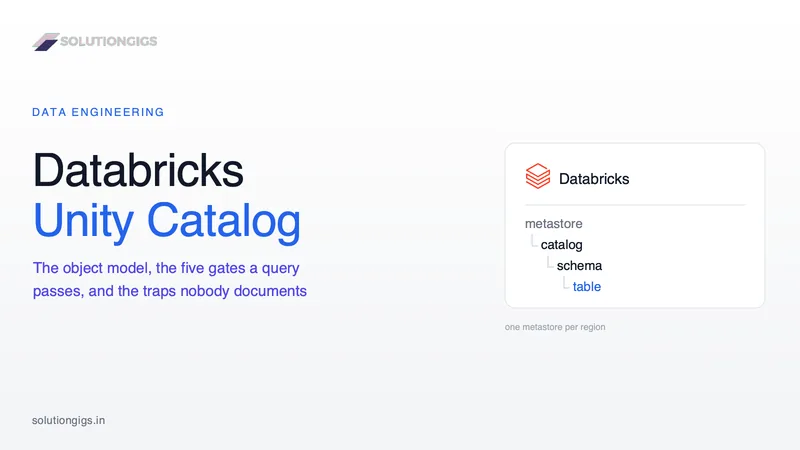
Databricks Unity Catalog Explained: The Model, the Gates, the Traps
Unity Catalog is an authorization boundary, not a catalog you browse — and most problems are a query stopped at one of five gates, not a missing GRANT. This guide covers the object model, the five gates, and the traps that break real workspaces: the one-metastore-per-region rule that kills most isolation designs, the compute access mode that makes Unity Catalog invisible to Terraform-created jobs, the seven-day (not thirty-day) undrop clock on managed tables, and what the open-source Unity Catalog actually is.
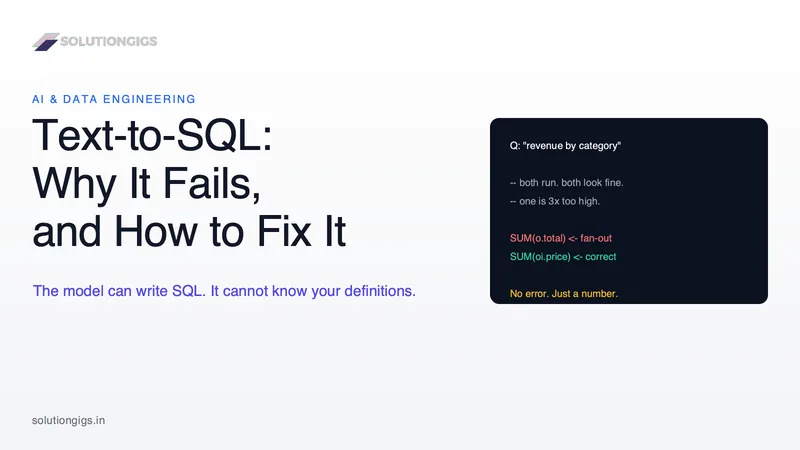
Text-to-SQL Explained: Why It Fails in Production and How to Fix It
Text-to-SQL fails by returning a plausible wrong number, not an error, and the cause is almost never the model. This guide covers the four things a schema cannot tell an LLM, the fan-out join that silently triples revenue, why the published benchmarks are measured against answer keys that are more than half wrong, what a semantic layer genuinely fixes and what it refuses, and the seven gates that make a text-to-SQL system safe to hand to a business user. With an interactive fan-out demo and a learning path.
A Developer Job Board That Screens Scams Before They Go Live
Every listing on the SolutionGigs job board is screened before it goes live. Here is what the gate refuses, and how to post a developer role for free. It covers the deterministic checks that reject advance fees, identity harvesting, money-mule work, MLM pitches and discriminatory restrictions before any AI model runs — plus the classification bug that put welding engineers on a developer board, and why a fallback category is not a filter.
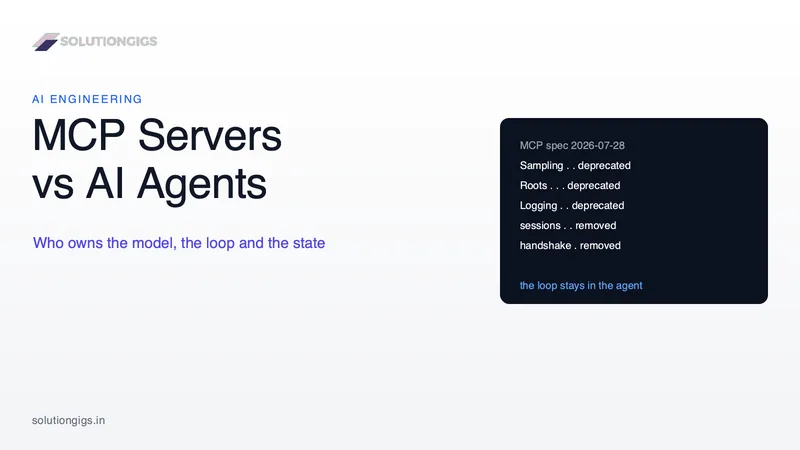
MCP Servers vs AI Agents: Who Owns the Agent Loop
An MCP server has no model and no loop. An AI agent has both. They are layers, not alternatives — and on 28 July 2026 the specification made that boundary official by deprecating Sampling, Roots and Logging and removing protocol sessions. This guide gives the four questions that tell you which layer you are building, the control-inversion proof hiding in Multi Round-Trip Requests, and exactly what breaks when you hide an agent loop inside an MCP tool handler.
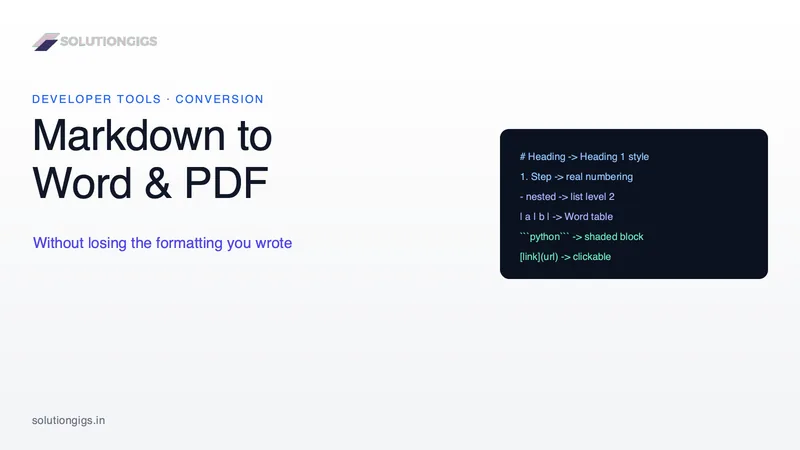
How to Convert Markdown to Word and PDF Without Losing Formatting
Nested lists collapse, numbering restarts and code blocks vanish when Markdown becomes a Word file. Here is why it happens, and six checks that catch it. Every guide tells you to reindent to four spaces — but your document was never wrong, the converter's indentation rule was.
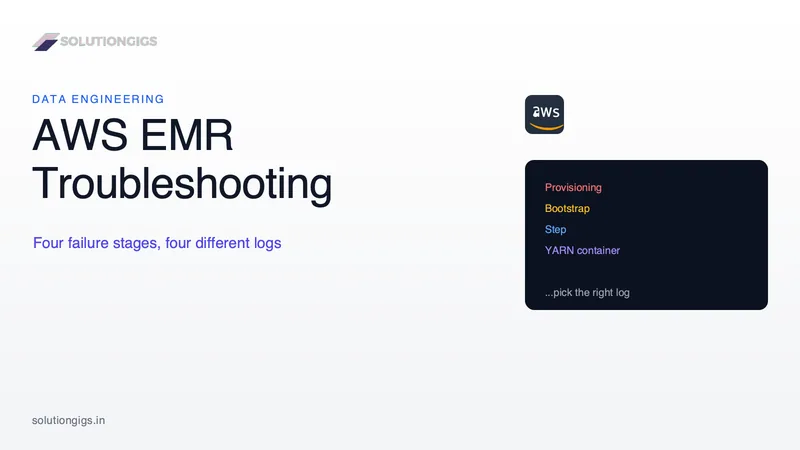
AWS EMR Troubleshooting: How to Diagnose a Failed Cluster
An Amazon EMR job fails at one of four stages - provisioning, bootstrap, step or YARN container - and each writes to a different log. Map the stage first. This guide gives you every stage's log path, then names the three most-repeated EMR fixes on the internet that are obsolete or actively harmful: EMRFS consistent view, redundant since S3 went strongly consistent in December 2020 and still billing you for a DynamoDB table; disabling the YARN vmem check, which the error message itself recommends but which only removes the detector node-wide; and raising fs.s3.maxRetries for 503 Slow Down, when the S3 quota is per prefix. Plus the memoryOverhead ceiling that turns a crash into an indefinite ACCEPTED hang, and the EMR release-support clock that expired on 7.2.0 in July 2026.
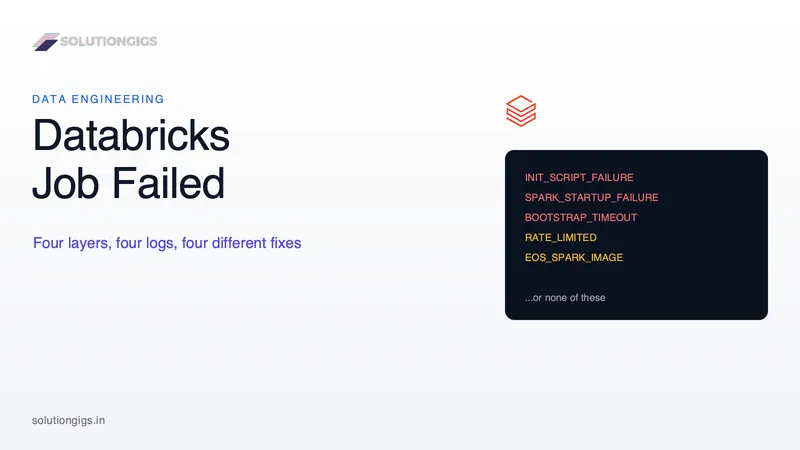
Databricks Job Failed: How to Find the Real Cause
A failed Databricks job is really one of four different failures, each with its own log, its own fix and its own owner. Route it before you debug it. This guide gives you the 60-second routing model instead of another alphabetical error-code list, plus three traps that cost real money: the Repair run button that silently duplicates data because Databricks does not make tasks idempotent, the retry policy that bills 5.2x a clean run with 35% of it an idle cluster, and the concurrency default that skips runs without ever firing an alert. Includes the Databricks Runtime 13.3 LTS end-of-support date and the system table queries that find your real top failure causes.
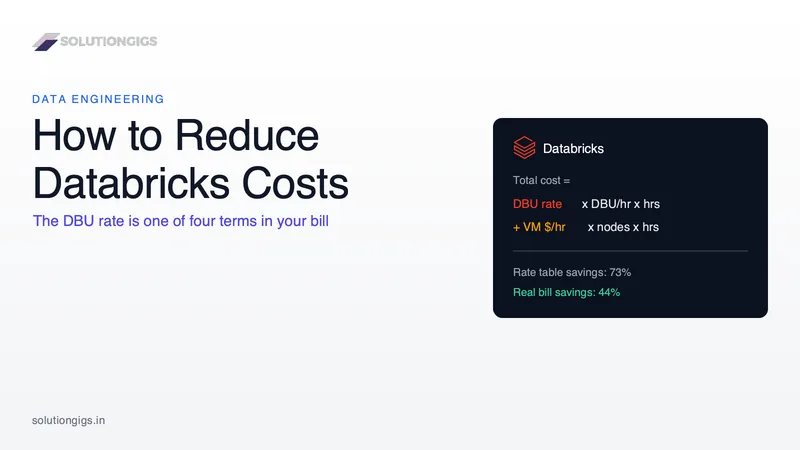
How to Reduce Databricks Costs Without Slowing Pipelines Down
Most guides to reducing Databricks costs open with a DBU rate table, but the rate is only one of four terms in your bill and the one you control least. This guide works a real cluster through all four - showing why moving scheduled jobs off All-Purpose Compute cuts the actual invoice by 44% rather than the 73% the rate table implies, why Photon must make a job 23% faster just to break even and does nothing at all for UDF-heavy code, why spot never touches the DBU line, and why a published TPC-DS benchmark found the highest-rate SKU produced the cheapest run. Plus the August 2026 predictive optimization rollout that may already be billing you twice for the same table maintenance.
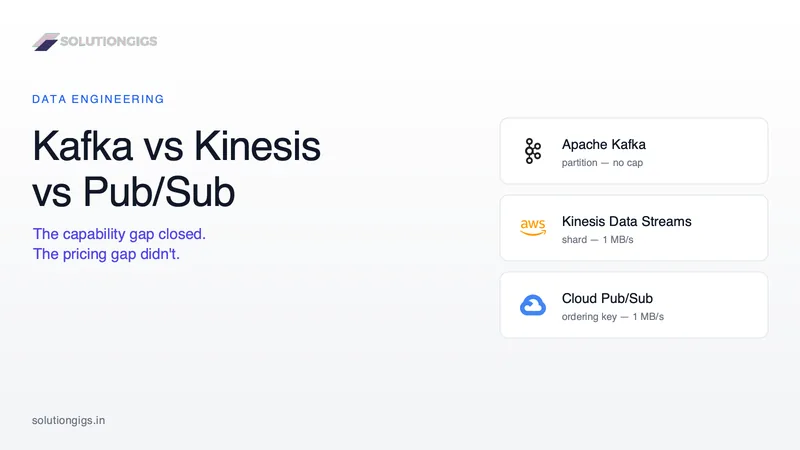
Kafka vs Kinesis vs Pub/Sub: How to Actually Choose
Kafka, Kinesis and Pub/Sub now sell the same durable, replayable log, so the real decision is the unit of ordering and the shape of the bill. This guide costs all three at 1, 10 and 100 MB/s with the assumptions shown, explains why provisioned Kinesis wins on price but not on risk, why batching records from 1 KB to 25 KB cuts the PUT charge 25x, and why a Pub/Sub topic with five subscribers costs six times one with none - plus the three dated changes (Kafka 4.0 dropping ZooKeeper, Kinesis On-demand Advantage, the Pub/Sub Lite turndown) that make most existing comparisons wrong.
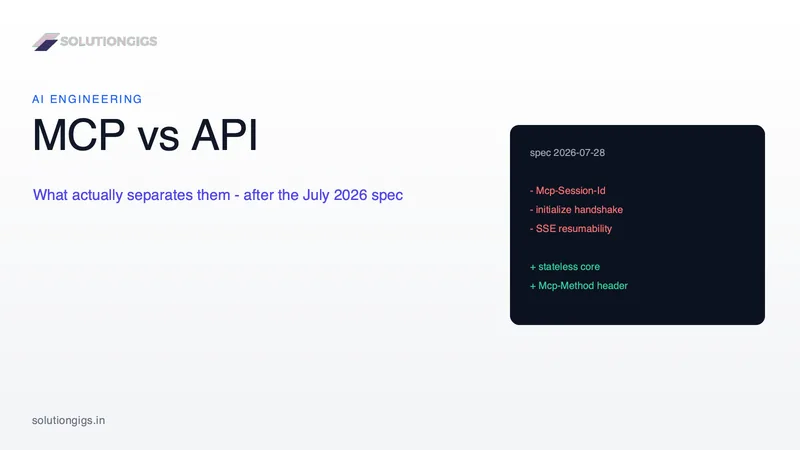
MCP vs API: What's Actually Different
The usual answer - APIs are stateless, MCP holds a stateful session - stopped being true on 28 July 2026, when the specification removed protocol-level sessions outright. This guide gives the difference that actually holds: who reads the contract, and when. It covers what the 2026-07-28 revision removed, answers the live "is stateless MCP just an API again" argument honestly, and includes a decider for the fork you really face - build an MCP server, or just write tool definitions.
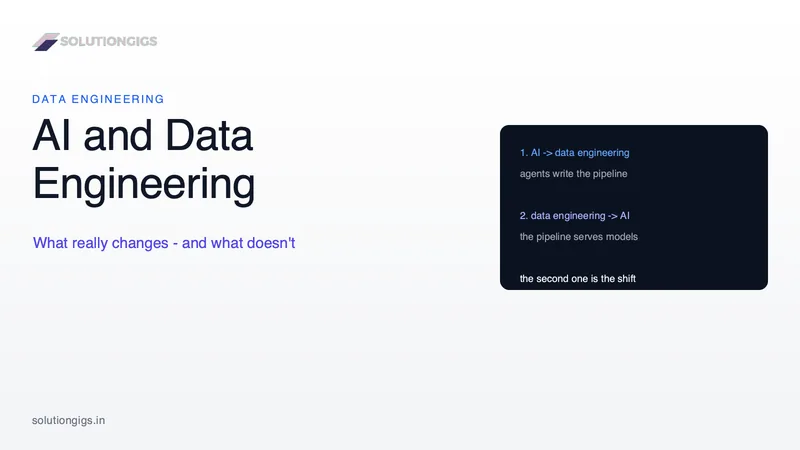
AI and Data Engineering: What Really Changes and What Doesn't
AI changed data engineering in two directions at once, and most articles only cover one: agents that write pipelines, and pipelines that serve models. This guide separates them, then defines what "AI-ready data" actually means as a specification rather than a slogan - a ten-dimension comparison against the BI-ready standard, a decision table for what to delegate to agents and what to never hand over, and a 90-day plan to get a platform ready.
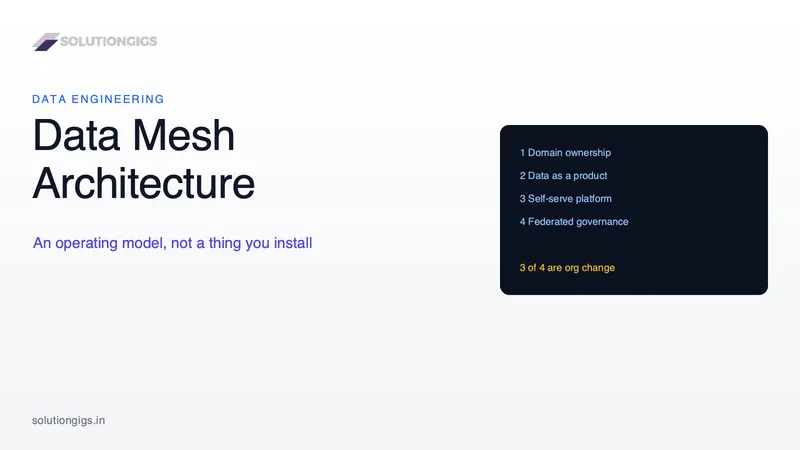
Data Mesh Architecture: What It Is and When It Actually Works
Data mesh is an operating model, not an architecture you can install — it moves data ownership to the business domains and holds them to a product standard. This guide skips the hype and answers the question every other one dodges: should you actually do this? Inside: the four principles stated plainly, an honest verdict on what survived after five years of real adoption (the data product model went mainstream; full decentralization mostly didn't), the 8-item spec a dataset must meet to be a data product, a readiness gate scored on six signals, the data mesh vs data fabric vs lakehouse table, the hybrid shape teams actually run, and a 90-day path that starts with one product instead of a domain-boundary workshop.
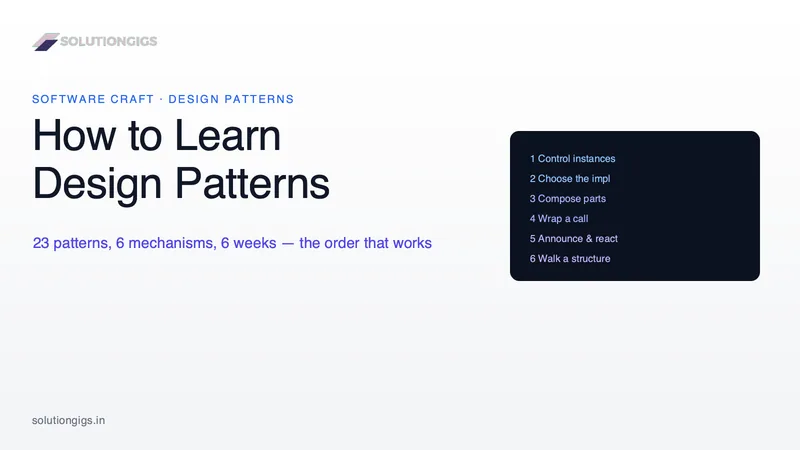
How to Learn Design Patterns Without Memorising 23 UML Diagrams
Most developers learn design patterns twice: once from a book, and again two years later in a code review. This guide closes that gap with a six-week path through all 23 Gang of Four patterns — the order to take them in, the six mechanisms that turn 23 concepts into 6, a 40-minute study loop per pattern, the nine confusion pairs you must learn together, and a four-question test for whether one actually stuck.
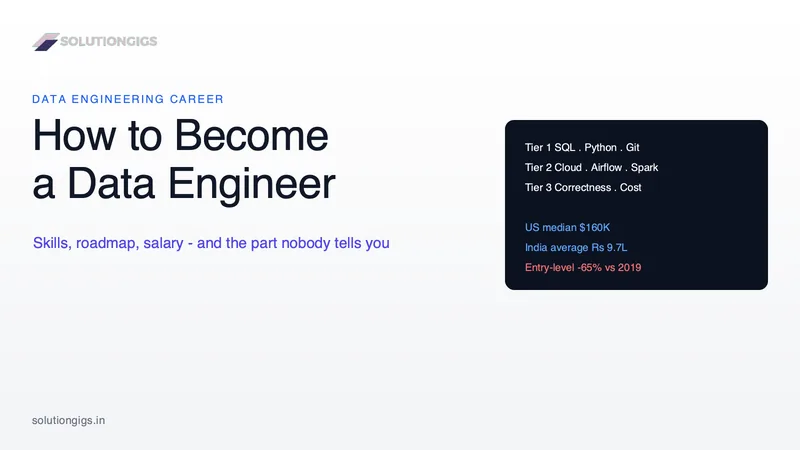
How to Become a Data Engineer: Skills, Roadmap & Salary
How to become a data engineer: the four real entry paths, a six-month roadmap with stop conditions, current US and India salary data, and the honest catch. Demand is real - Robert Half puts the US starting midpoint at $156,250 and 78% of tech leaders are adding headcount - but entry-level hiring is down about 65% against 2019, which is why finishing a course and getting no callbacks are both normal. Inside: what the primary sources actually say (including the BLS stat every guide miscites), the four doors into the field and which is shortest, a three-tier skill order, a month-by-month roadmap with stop conditions, US and India salary tables with collection dates, and the portfolio bar that gets callbacks.
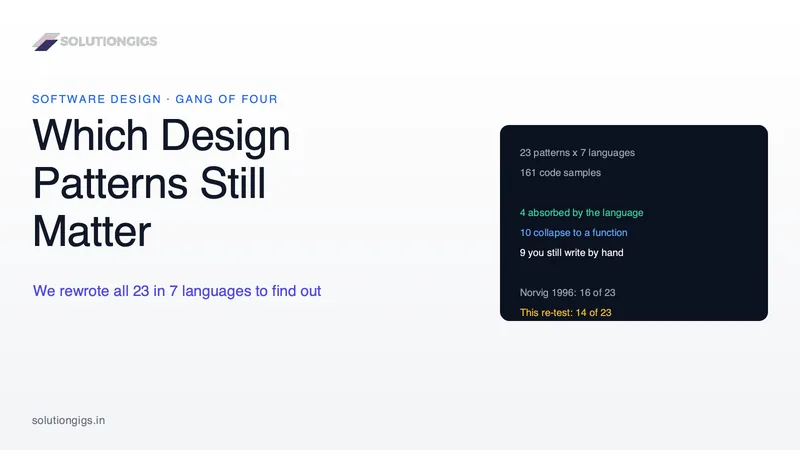
Which Design Patterns Still Matter — and Which Your Language Already Absorbed
Peter Norvig said 16 of 23 GoF design patterns vanish in a dynamic language. We rewrote all 23 in 7 languages to check, and counted 14. This guide gives the verdict pattern by pattern — the 4 your language already ships, the 10 that collapse into a single function, and the 9 you still have to write by hand — plus why those 9 survived, what changes when you switch language, and the three comparisons interviewers actually ask about.
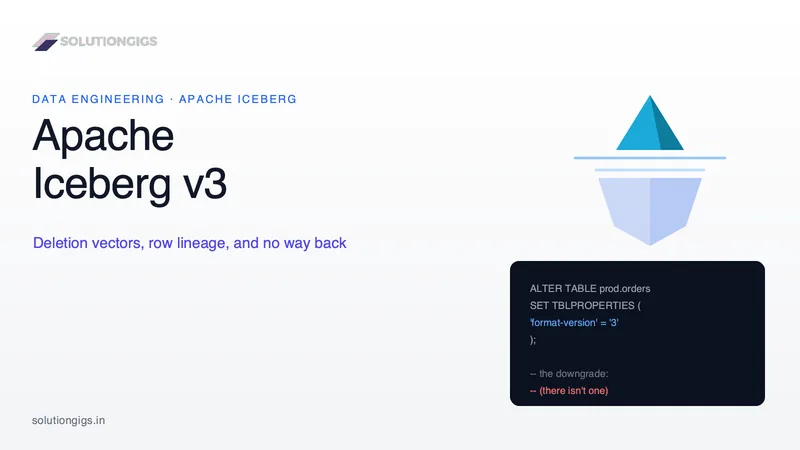
Apache Iceberg v3: What Actually Changed, and When to Upgrade
Apache Iceberg v3 adds deletion vectors, row lineage, the variant type and geospatial types — and the upgrade is one line of SQL with no way back. This guide covers what each feature actually changes, the engine support matrix as of August 2026 (including the Trino and Athena gaps that block most fleets), what the widely-quoted AWS benchmark really measured, and a migration runbook. With two interactive tools: a delete-metadata explorer and a readiness checker for your own engines.
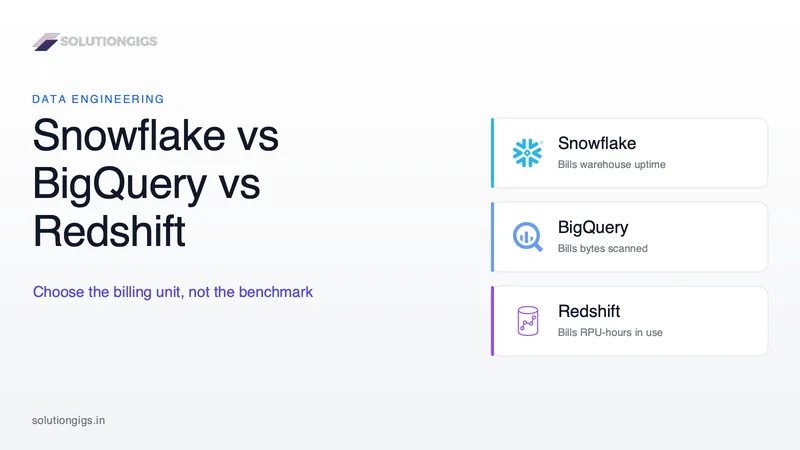
Snowflake vs BigQuery vs Redshift: How to Choose
Snowflake vs BigQuery vs Redshift, decided by the only thing that matters: what each one puts on the meter. Snowflake bills warehouse uptime, BigQuery bills bytes scanned, Redshift bills RPU-hours in use. This guide uses rates read straight from each vendor's own pricing documents, plus three break-even calculations nobody else publishes - the 1.35x Gen2 credit multiplier and the speedup it demands, BigQuery's logical-vs-physical storage crossover, and the on-demand-vs-reservation line - a worked monthly cost example, and what actually changed in 2026 with Redshift's Graviton RG nodes.
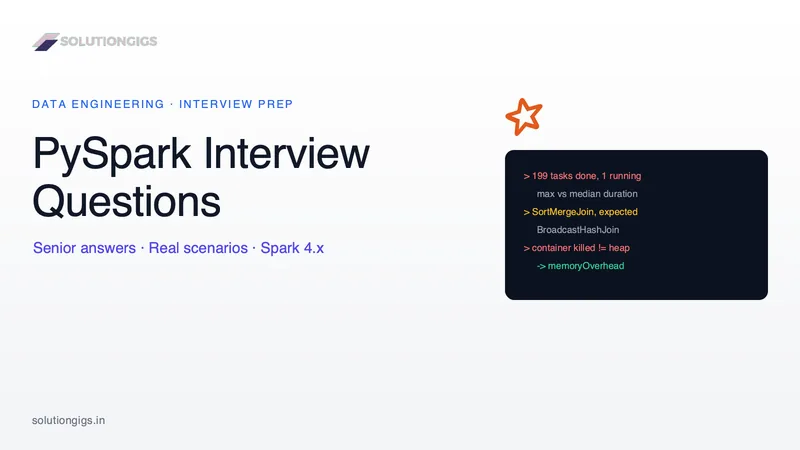
PySpark Interview Questions and Answers: Senior-Level Guide
PySpark interview questions with senior-level answers, six real debugging scenarios, how to read a physical plan, and the Spark 4.x facts most guides miss. Most guides hand you definitions — but definitions are only the screening filter. Roughly two-thirds of a mid-to-senior PySpark interview is some form of "this job got slow, what do you do?", and what scores is naming the evidence you'd look for before touching a config. Inside: every core answer in screening form and senior form side by side, six real scenarios (the 3-hour regression, the one slow task, the OOM that isn't a heap problem, 50,000 tiny files, growing Kafka lag, and a design round), and the six commonly-taught answers that are actually wrong.
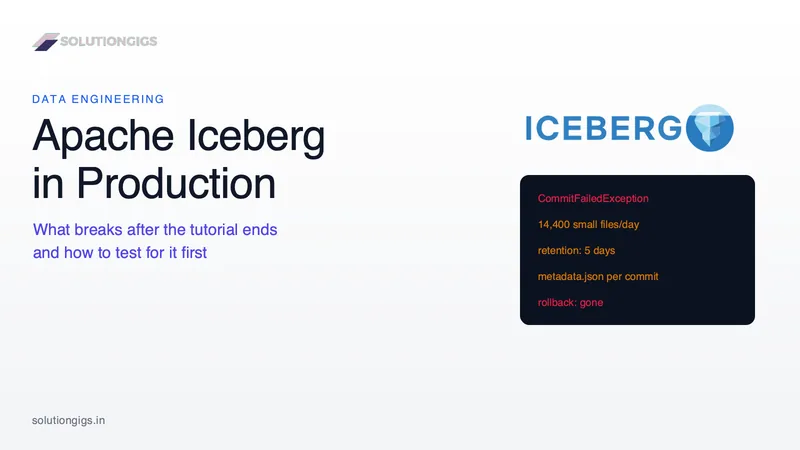
Apache Iceberg in Production: How to Test It Before It Breaks You
Iceberg tutorials stop at CREATE TABLE. Production starts at the second writer, the 40th day of a streaming job, and the snapshot expiry that deleted your rollback. This guide covers the four levels of Iceberg testing with runnable pytest fixtures, then walks nine production failure modes in the order they actually bite — commit conflicts, small files, retention, metadata bloat, write amplification, schema and partition evolution, the catalog as a single point of failure, and cost — with the exact table properties that prevent each one, plus a launch checklist.
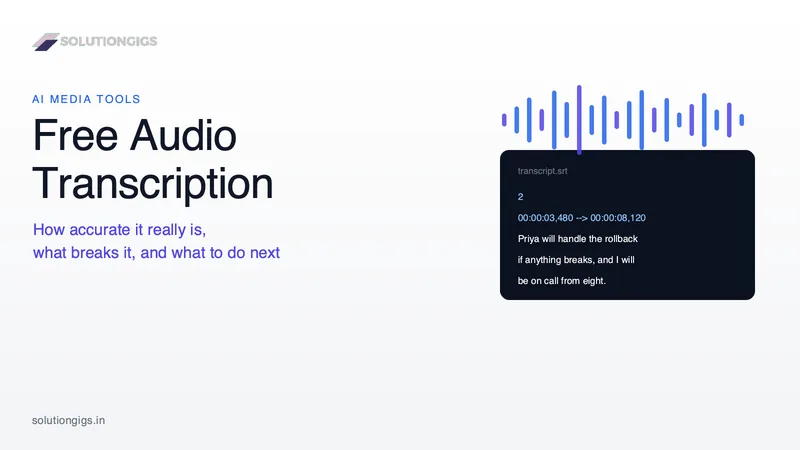
Free Audio Transcription to Text: The Complete Workflow
Free audio transcription to text is good enough for real work now — but the recording, not the model, decides whether your transcript is usable. This guide explains how AI transcription actually works, how word error rate is measured (with a calculator you can run on your own text), the four things that destroy accuracy, the hallucination problem nobody warns beginners about, the difference between TXT, SRT and VTT, why free tools do not label speakers, and how to turn a raw transcript into meeting notes, chapters or subtitles.
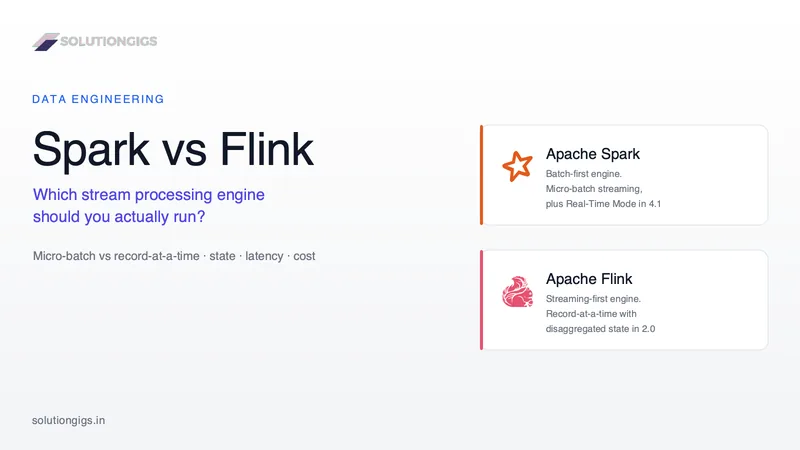
Spark vs Flink: Which Stream Processing Engine to Choose
Every Spark vs Flink comparison online rests on the same claim — Spark micro-batches, Flink truly streams, so pick Flink for low latency. That claim expired: Spark 4.1 shipped Real-Time Mode with millisecond-range p99 latency, and Flink 2.0 moved state to object storage. This guide gives you the one architectural idea behind both engines, an original diagram of how a record travels through three execution models, the differences that did not converge (state, timers, recovery blast radius, backpressure), a latency ladder to test whether you need per-event processing at all, and the honest cost of running two engines — including why we chose not to adopt Flink.
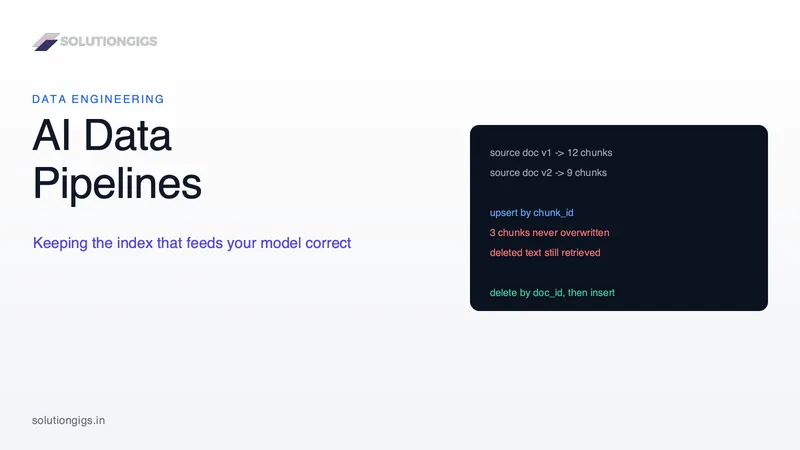
AI Data Pipelines: How to Build One That Doesn't Go Stale
An AI data pipeline is easy to build once and hard to keep correct. This guide covers the sync problems that only appear in production: the chunk-boundary trap that leaves deleted text retrievable, why vector deletions are harder than inserts, what an embedding model upgrade actually costs, and how to choose a freshness target you can defend. The core reframe: your vector index is a materialised view over your source content, so every one of these problems already has a known data engineering answer.
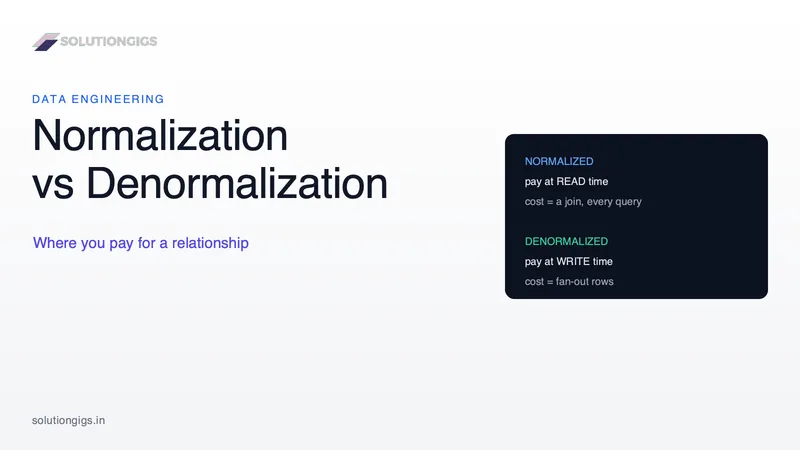
Normalization vs Denormalization: When to Break the Rules
Normalization vs denormalization isn't a debate about table counts — it's a decision about where you pay for a relationship. Normalized schemas pay on every read (a join); denormalized schemas pay on every write, and the bill is the fan-out: how many rows must be rewritten when one source value changes. This guide gives the cost model, the normal forms and the three anomalies on a real table, the five denormalization patterns with the maintenance cost of each, why columnar engines changed the classic advice, the escalation ladder to climb before duplicating anything, and the one rule that has saved us the most pain: denormalize the key, join the label.
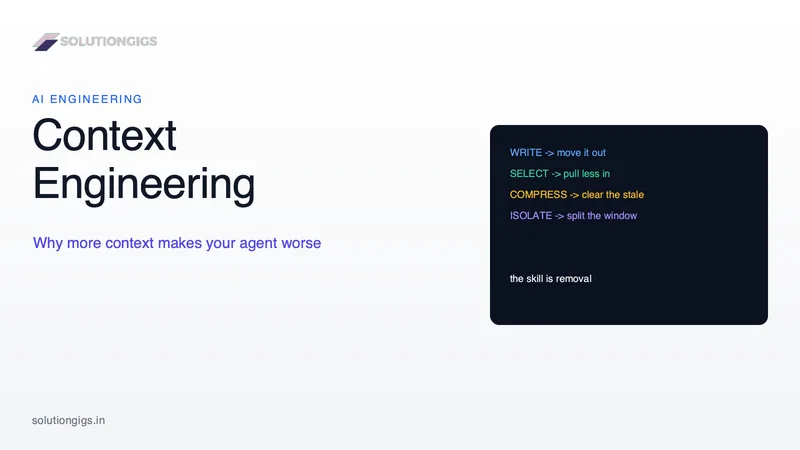
Context Engineering: The Skill That Replaced Prompt Engineering
Context engineering replaced prompt engineering as the core AI skill, and its central finding is counterintuitive: more context usually makes an agent worse. This guide covers the research behind context rot (Chroma's 18-model study), the four failure modes you'll actually hit in production, the write/select/compress/isolate techniques that fix each one, a worked token budget showing where your context really goes, and Anthropic's measured 29%/39% gains from clearing stale context. Every number cited.
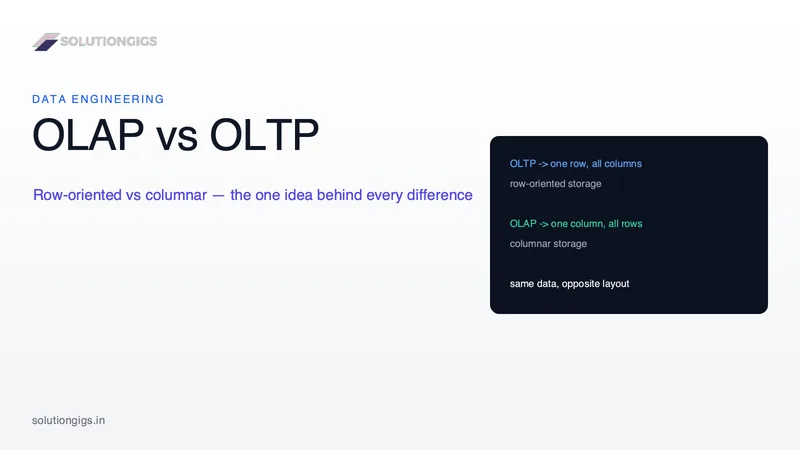
OLAP vs OLTP: The Real Difference Every Engineer Should Know
Most OLAP vs OLTP explainers hand you a twelve-row table and stop — which is no help when a dashboard query brings your production database to its knees. This guide starts with the one physical fact that generates the entire comparison: OLTP stores data row by row, OLAP stores it column by column. From there you get the full side-by-side, an original storage-layout diagram, an honest escalation ladder for moving analytics off your transactional database (including why a read replica is the most common wrong fix), and where lakehouses, DuckDB and HTAP actually fit.
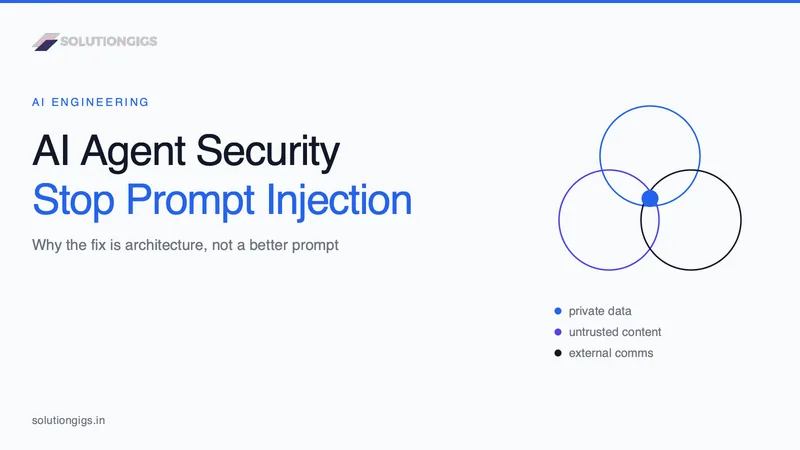
AI Agent Security: Stopping Prompt Injection
Prompt injection is the number one AI agent risk, and no prompt or filter fixes it. This guide covers the lethal trifecta, the arithmetic showing why a 99%-accurate guardrail is not a control, a decision table for which leg to cut in six common agent shapes, the exfiltration channels teams forget to audit, the MCP tool-poisoning and rug-pull attacks, the six research-backed design patterns that provably constrain agents, and how our own auto-publishing gate is built so a successful injection can flip at most one enum.
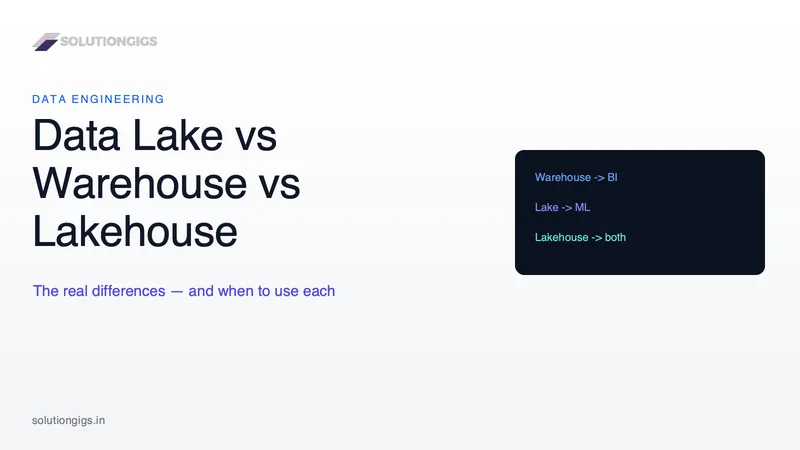
Data Lake vs Data Warehouse vs Lakehouse: The Real Differences
Data lake, data warehouse, and lakehouse aren't three products you pick off a shelf — they're three stages in how the industry solved the same problem, each born because the last one hit a wall. The one idea that separates them: when and where structure is applied to your data. This guide gives the one-line difference, a full side-by-side comparison table, the history that explains why the lakehouse exists (the “two-system tax”), a decision framework, and the mistakes that quietly cost teams money — written from the data-engineering trenches, not a vendor brochure.
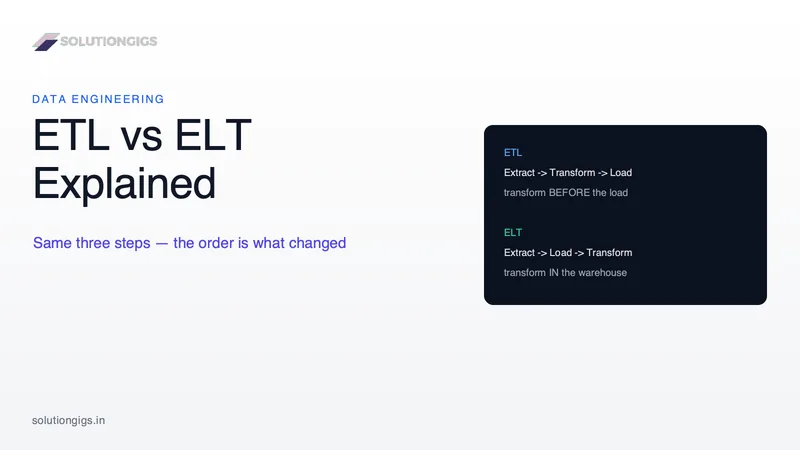
ETL vs ELT: What's the Difference and When to Use Each
"ETL vs ELT" sounds like a one-letter swap, but it's the fault line running through every modern data platform. Reorder those letters and you change where data is cleaned, how much raw data you keep, what it costs, and who can see sensitive fields before they're masked. The only real difference: whether the Transform runs in a separate engine before the load (ETL) or inside the destination after it (ELT). This guide covers schema-on-write vs schema-on-read, the full cost and PII trade-offs, the tooling on each side (dbt, Fivetran, Spark, Glue), and a decision framework — with a real lakehouse ELT example.
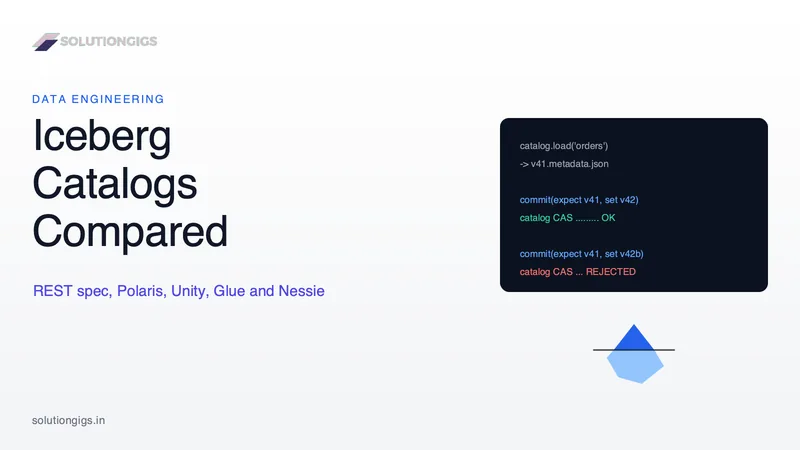
Iceberg Catalogs Compared: REST, Polaris, Unity, Glue and Nessie
An Iceberg catalog is not a search tool — it is the transaction coordinator that performs the atomic compare-and-swap making every commit visible. This guide explains the commit path step by step, then compares Apache Polaris, Unity Catalog, AWS Glue, S3 Tables, Nessie, Lakekeeper and Gravitino on the dimension most comparisons omit: what it costs to leave. It also covers the two-catalog mistake that silently loses committed data with no error raised anywhere, a live CVE affecting vended credentials, and what a catalog migration genuinely costs once you count access policies and engine configs.
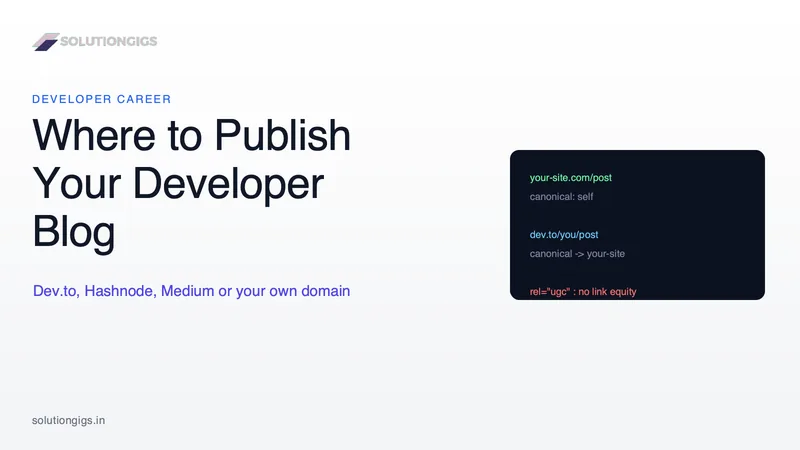
Where to Publish Your Developer Blog: Dev.to, Hashnode, Medium or Your Own Domain
Dev.to, Hashnode, Medium or your own domain? The real decision is who owns the audience and where the search credit lands. A practical guide to picking a home base, syndicating with canonical tags so your own site keeps the ranking, and why platform links are not backlinks.
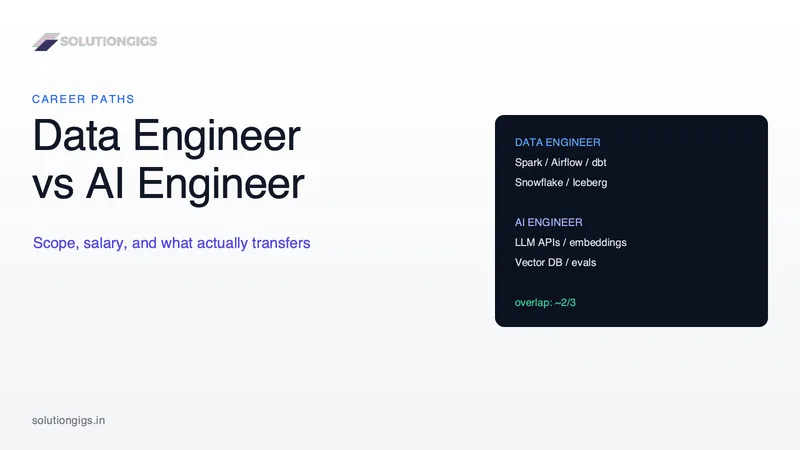
Data Engineer vs AI Engineer: Skills, Scope, Salary and Which to Pick
Data engineer vs AI engineer, decided on evidence: the WEF projects big data specialists at 110% growth to 2030 against 85% for AI and ML specialists, while Robert Half puts AI pay 9% ahead at the midpoint. Wider scope on one side, bigger premium on the other. Inside: a 12-row comparison table, US and India pay bands with their caveats, the stat every career post miscites, an original map showing a RAG pipeline IS an ETL pipeline stage for stage, an honest ledger of what transfers and what does not, and a 90-day plan to move from data to AI.
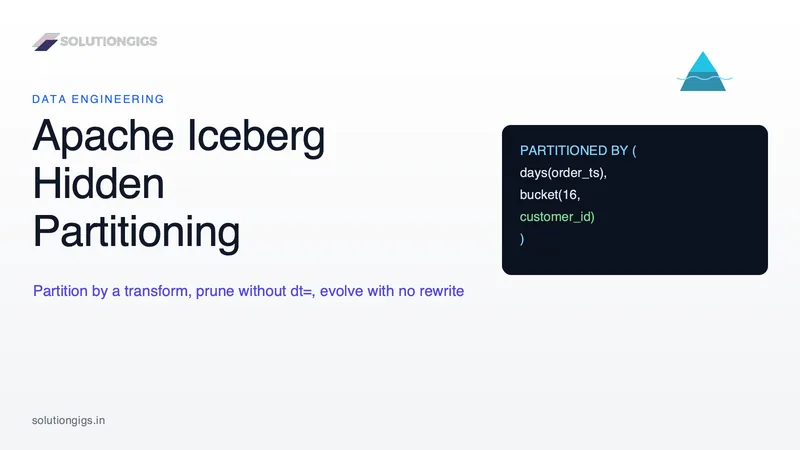
Apache Iceberg Hidden Partitioning: A Complete Guide
Apache Iceberg hidden partitioning lets the engine — not the analyst — apply partition transforms like days(order_ts) or bucket(16, customer_id), so queries prune files from a normal predicate with no dt= column and no accidental full-table scans. This guide covers how hidden partitioning works under the hood, the four partition transforms, file pruning, partition evolution (change the layout with no rewrite), and Hive vs Iceberg partitioning — plus the common mistakes that create a small-files disaster.
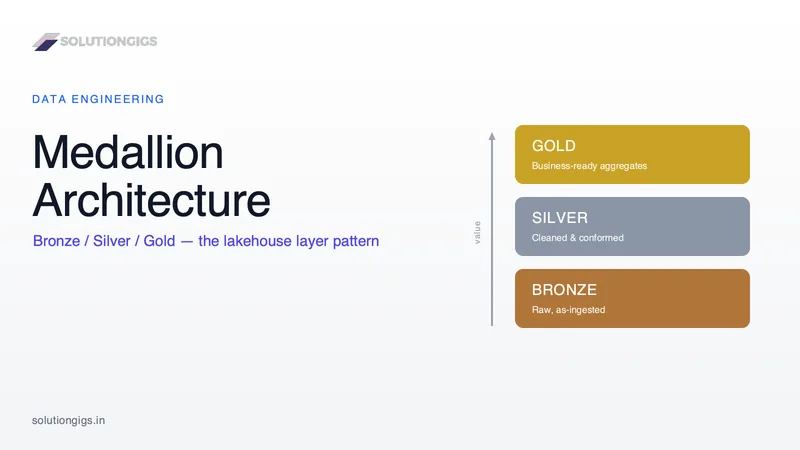
Medallion Architecture Explained: Bronze, Silver & Gold Layers
Most data platforms fail slowly: a pipeline "works" for months, then a dashboard number won't reconcile and nobody can trace it because raw data was overwritten and cleaning is tangled with business logic. Medallion architecture is the fix — three progressively refined lakehouse layers (Bronze raw, Silver cleaned, Gold business-ready) where quality and value rise at every hop. This guide covers what each layer is responsible for, how to build the multi-hop pipeline in PySpark, where data quality checks belong, medallion vs traditional staging, and the anti-patterns that quietly break lakehouses.
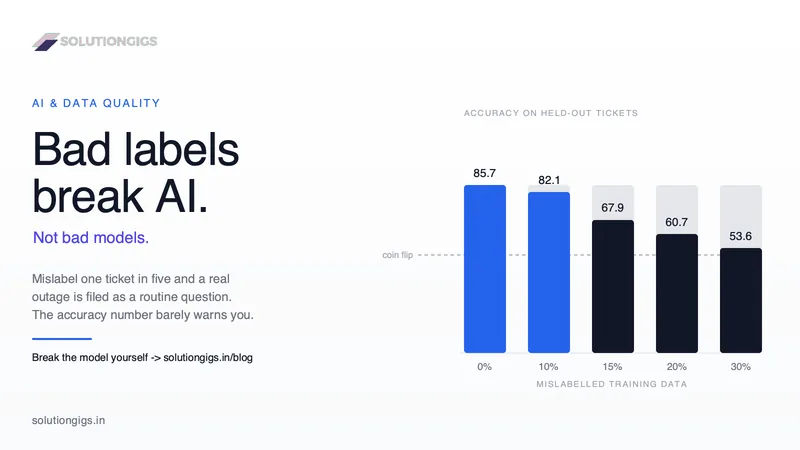
AI and Data Quality: The Real Reason AI Projects Fail
Gartner expects 60% of AI projects to be abandoned over data, not models. Break a real classifier in your browser and watch bad labels destroy it. Inside: a live lab where you poison the training data and watch a genuine outage get reclassified as routine, three reader polls, four public AI disasters dissected, and the seven fixes that actually move accuracy.
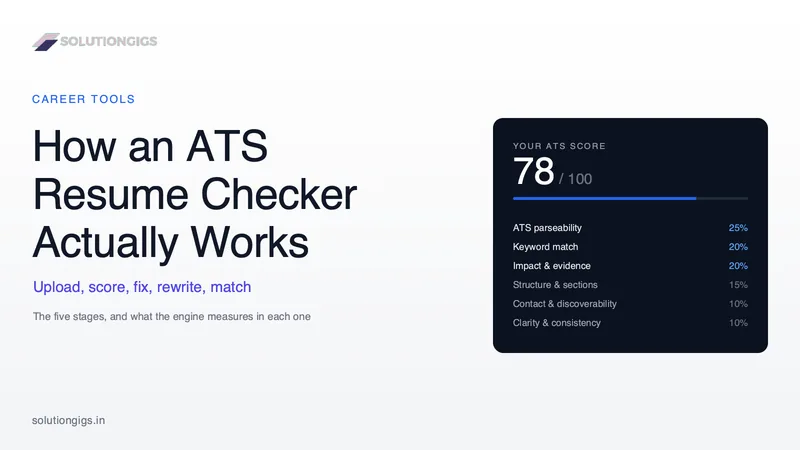
How an ATS Resume Checker Works — Upload to Job Match
How an ATS resume checker works, stage by stage: what it reads in your file, how the score is built, and how job matching works. A five-stage walkthrough from the team that built one — including the published sub-score weights, how two-column layouts are detected from glyph positions, why a pasted resume hides the faults that matter, and how the AI rewrite is verified against your original so nothing is invented.
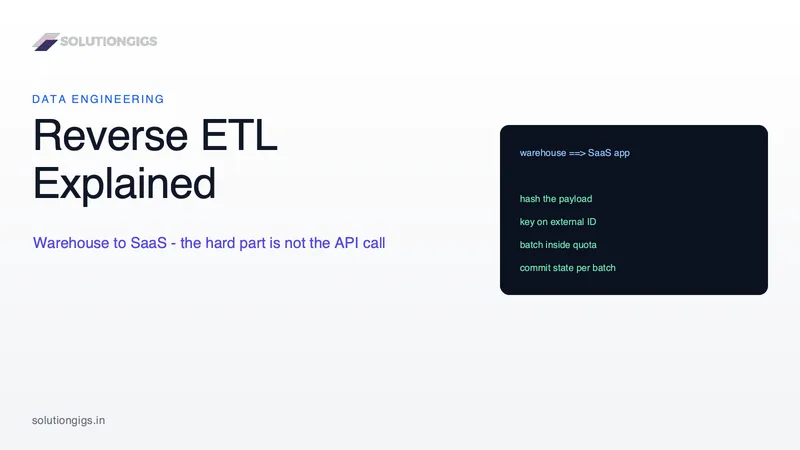
Reverse ETL Explained: Warehouse to SaaS Data Activation
Reverse ETL pushes modeled data out of your warehouse and into the SaaS tools people actually work in — Salesforce, HubSpot, Braze. It's your ELT pipeline run backwards, and the arrow in the diagram hides everything that's hard about it. This guide covers the part after the arrow: the five engineering problems every sync must solve (change detection by payload hash, stable external IDs, rate-limit math, per-batch idempotency, per-record failure handling), each with the exact way it fails; a build-vs-buy table; where the tooling market went after Fivetran absorbed Census and merged with dbt Labs; and the latency floor that tells you when reverse ETL is the wrong tool entirely.
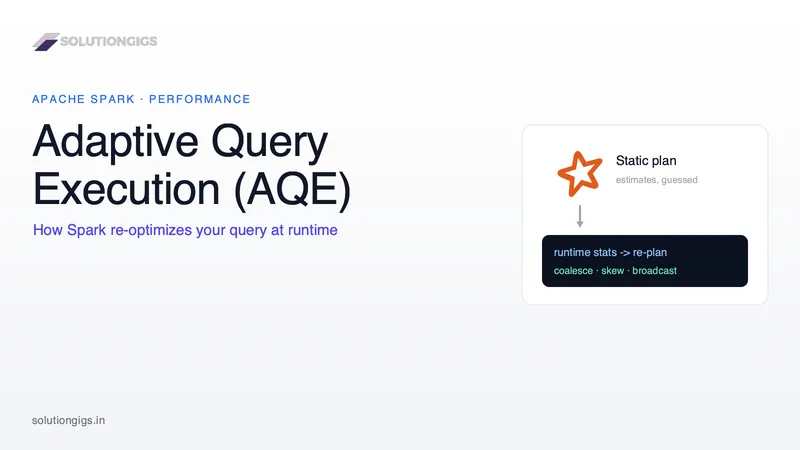
Spark Adaptive Query Execution (AQE): The Complete Guide
Spark's Catalyst optimizer plans your query before a single row moves — using estimates it can only guess at. When those guesses are wrong you get 200 partitions for 3 MB of data, a sort-merge join where a broadcast would be 10x faster, or one skewed task that runs for 40 minutes. Adaptive Query Execution (AQE) is Spark's fix: it re-optimizes the plan mid-flight using real runtime stats — coalescing partitions, splitting skew, and switching join strategies. On by default since Spark 3.2. This guide covers how it works under the hood, its three optimizations with PySpark, the configs that matter, and where AQE still needs a human.
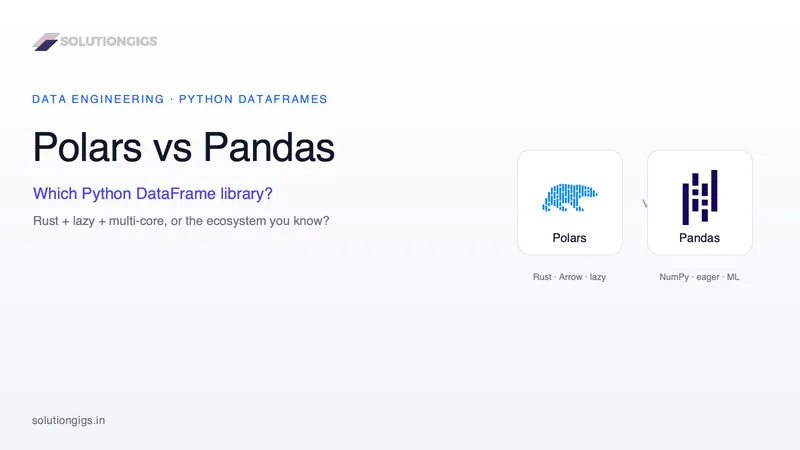
Polars vs Pandas: Which DataFrame Library to Use
For fifteen years, working with data in Python meant Pandas. But if you've watched a Pandas script crawl through a 5 GB CSV on a single core while fifteen others sit idle, you've felt its limits. Polars is the Rust-powered answer — built on Apache Arrow with multi-threaded, lazy execution that runs 5-50x faster on far less memory. This is the honest comparison: how they differ, the same code in both, when to use each, and how to migrate without leaving the Pandas ecosystem behind.
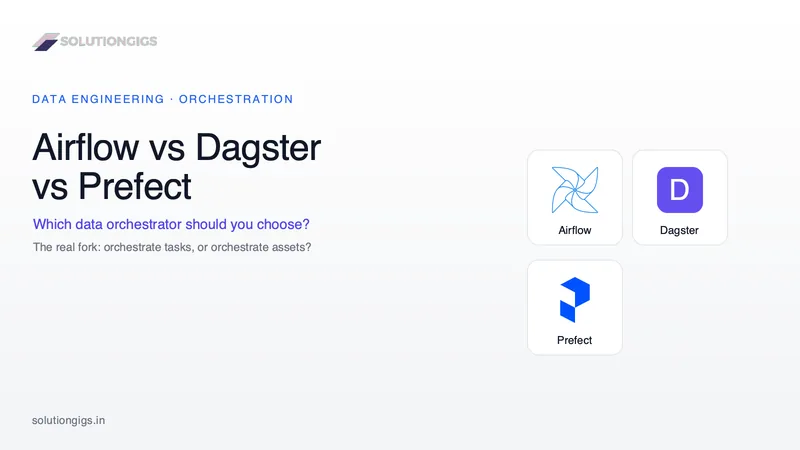
Airflow vs Dagster vs Prefect: Which Orchestrator to Choose
Every data team eventually needs an orchestrator — the tool that runs pipelines on schedule, in the right order, retries failures, and tells you when something breaks. For years that meant Airflow by default. In 2026 the choice is genuinely competitive: Dagster brought asset-centric lineage, Prefect rebuilt the developer experience around plain Python, and Airflow 3 answered with a major modernization. Here's an honest, engineer's comparison — how each one thinks, where each wins, and a clear decision guide.
DuckDB vs Spark: When to Use Each (and When Not To)
For a decade, "we have big data" meant "we need a Spark cluster." In 2026 that reflex is breaking: cloud machines now have terabytes of RAM, and DuckDB queries Parquet fast enough that the 40 GB job you've been running on a 10-node cluster often finishes quicker — and far cheaper — on a single box. This is an honest, engineer's comparison: what each tool really is, where each wins, DuckDB's real limits, and a decision rule you can apply to any job.
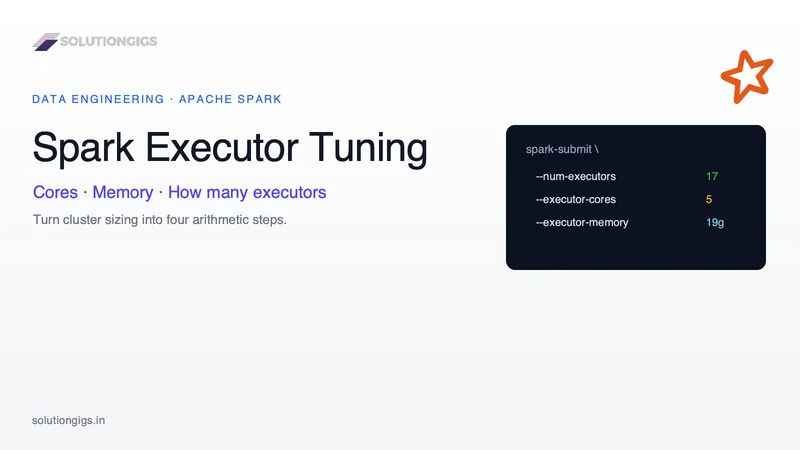
Spark Executor Tuning: Cores, Memory & How Many Executors
Ask three data engineers how to size a Spark cluster and you'll get three answers — and usually a job that crawls or dies with 'Container killed for exceeding memory limits.' This guide replaces the guesswork with four arithmetic steps: how many cores per executor (and why 5), how much memory, how to calculate the executor count, plus memoryOverhead, fat vs thin executors, dynamic allocation, and a fully worked sizing example you can copy.
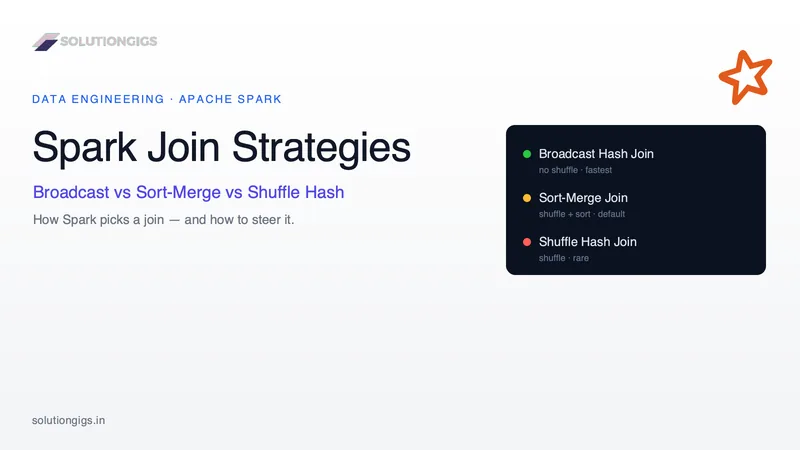
Spark Join Strategies: Broadcast vs Sort-Merge vs Shuffle Hash
The same Spark query can finish in 30 seconds or run for an hour — and the difference is almost always which join strategy the optimizer picked. This guide breaks down the three: broadcast hash, sort-merge, and shuffle hash join, exactly how Spark chooses between them, how to force a broadcast join (and the six reasons yours won't trigger), the key thresholds, and how Adaptive Query Execution re-plans joins at runtime — with a decision tree and real PySpark.
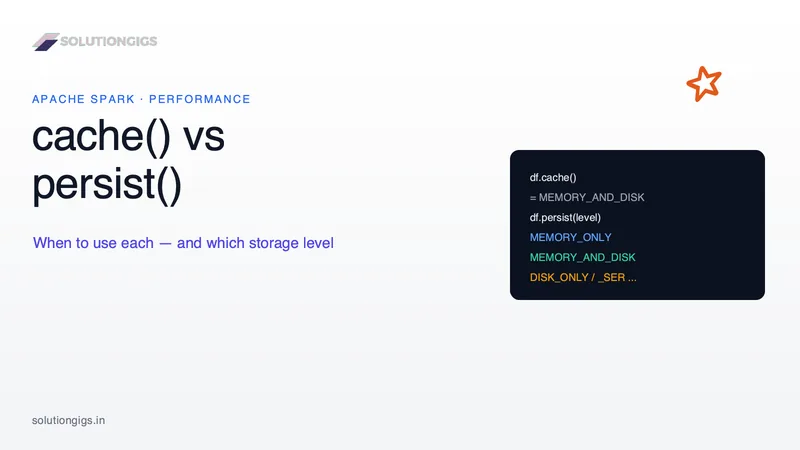
Spark cache() vs persist(): When to Use Each
cache() vs persist() is one of the most-asked — and most-misused — Spark features. The one-liner "cache keeps it in memory" hides two things that bite in production: which storage level you actually get (cache() is MEMORY_AND_DISK for DataFrames but MEMORY_ONLY for RDDs), and when caching helps at all (far less often than people think). This guide covers every StorageLevel, the DataFrame vs RDD gotcha, lazy evaluation, unpersist(), and a decision rule — with real PySpark.
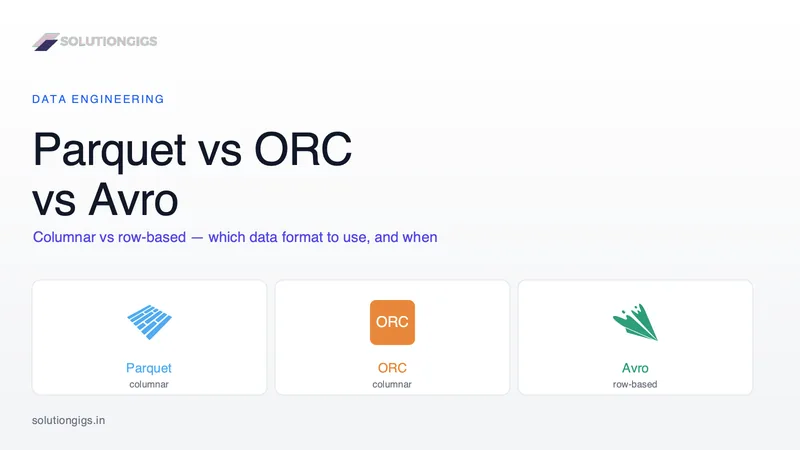
Parquet vs ORC vs Avro: Which Data Format to Use
Pick the wrong file format and everything downstream pays: queries scan 10x more data than they need, storage bills balloon, and schema changes become migrations. The real answer to "Parquet, ORC, or Avro?" is precise and comes down to one design decision — row-based vs columnar storage. This guide shows how each format stores data on disk, compares them on compression, schema evolution, and ecosystem, and gives a decision rule you can apply to any pipeline.
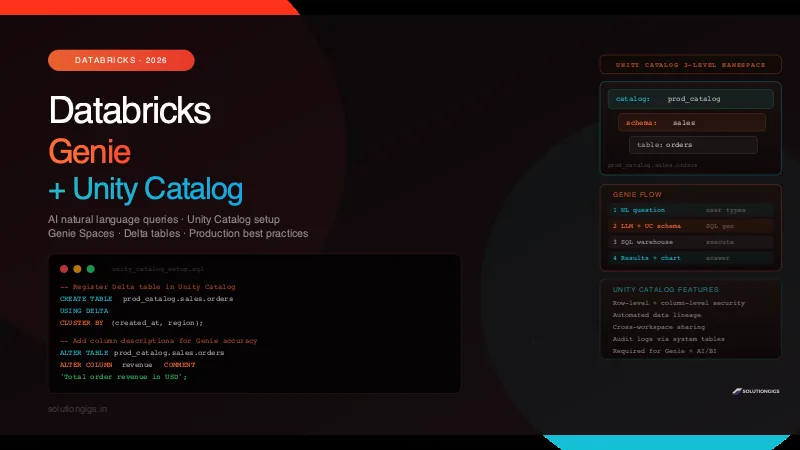
Databricks Genie Guide: Ask Your Data in Plain English
Databricks Genie lets anyone query data in plain English — no SQL needed. How it works, building Genie Spaces, Unity Catalog security, and production best practices.
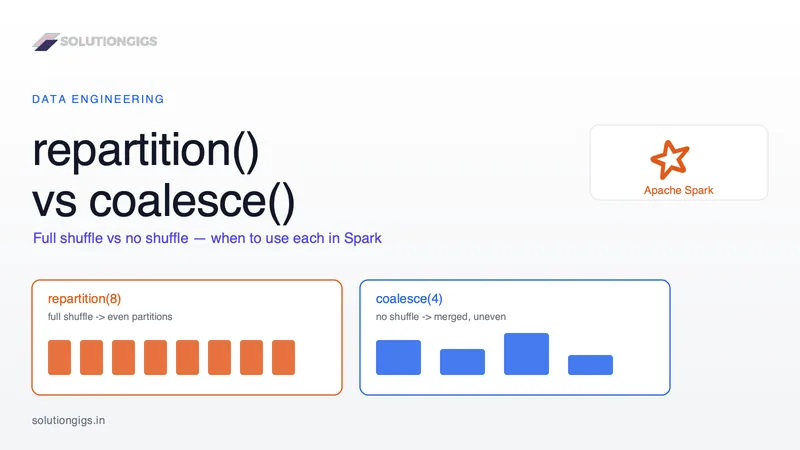
Spark repartition() vs coalesce(): When to Use Each
repartition() vs coalesce() is one of the most-asked Spark questions — in interviews and in real 2 a.m. debugging. The usual one-liner ("coalesce is cheaper") hides the detail that bites you: repartition() does a full shuffle for even partitions, coalesce() skips the shuffle but can only shrink and may leave skew. Pick wrong and you either waste a shuffle or silently throttle the whole job to one core. This guide covers what each does under the hood, a decision rule, the coalesce(1) trap, and how AQE fits in — with real PySpark.
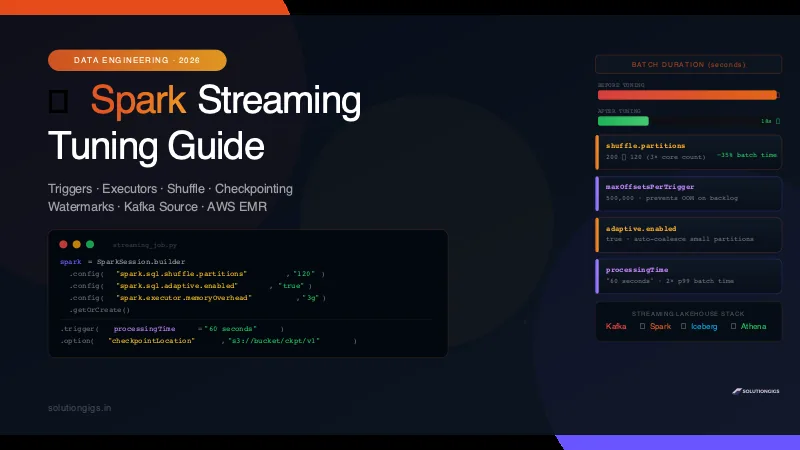
Spark Streaming Tuning Guide: Production Performance Tips
Spark Structured Streaming jobs slow or falling behind on AWS EMR? Real production tuning configs — shuffle partitions, AQE, maxOffsetsPerTrigger, checkpointing, watermarks, and foreachBatch patterns from a pipeline processing hundreds of millions of events daily.
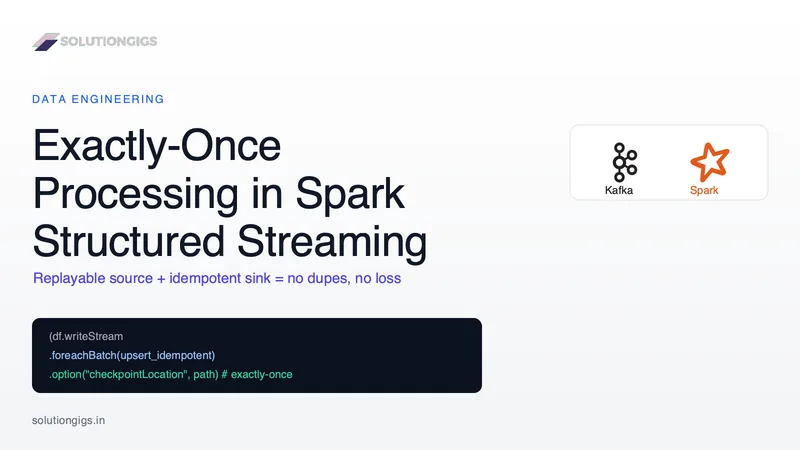
Exactly-Once Processing in Spark Structured Streaming
Ask ten engineers whether Spark Structured Streaming is exactly-once and you get ten contradictory answers. The truth: Spark gives you exactly-once state, but whether your pipeline is exactly-once depends on the source and sink. Get the sink wrong and you ship duplicate rows the first time an executor dies. This guide covers the three parts that must hold — replayable Kafka source, checkpointing, and idempotent foreachBatch sinks — with real PySpark code and the mistakes that quietly produce duplicates.
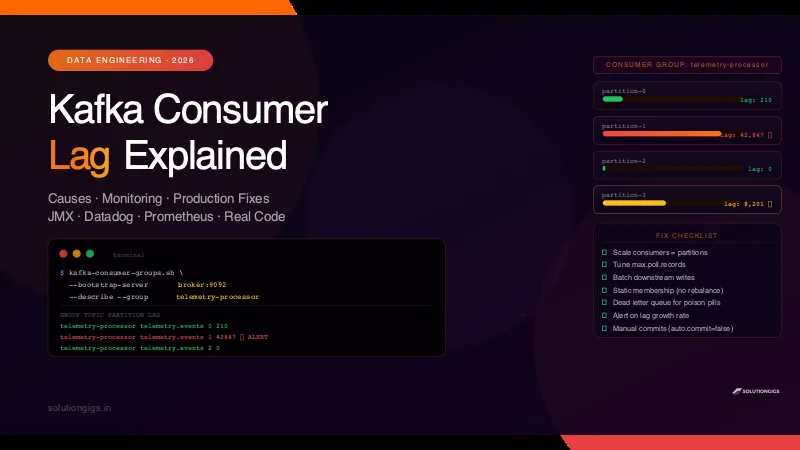
Kafka Consumer Lag Explained: Causes, Monitoring & Fixes
Kafka consumer lag spiking in production? A data engineer's guide to what causes it, how to monitor it with JMX, Datadog, and Prometheus, and 7 proven fixes — with real configs and code from a pipeline processing hundreds of millions of events daily.
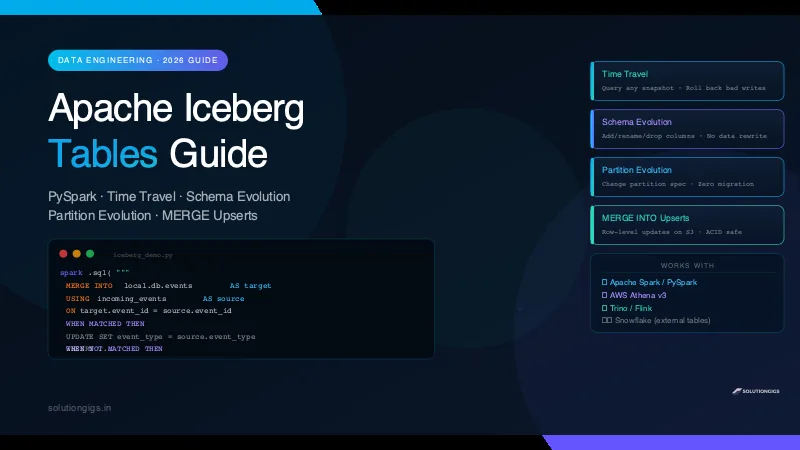
Apache Iceberg Tables: Complete Guide with PySpark Examples
A data engineer's practical guide to Apache Iceberg — time travel, schema evolution, partition evolution, and MERGE upserts with real PySpark code you can run today. Built from production Spark/EMR experience.
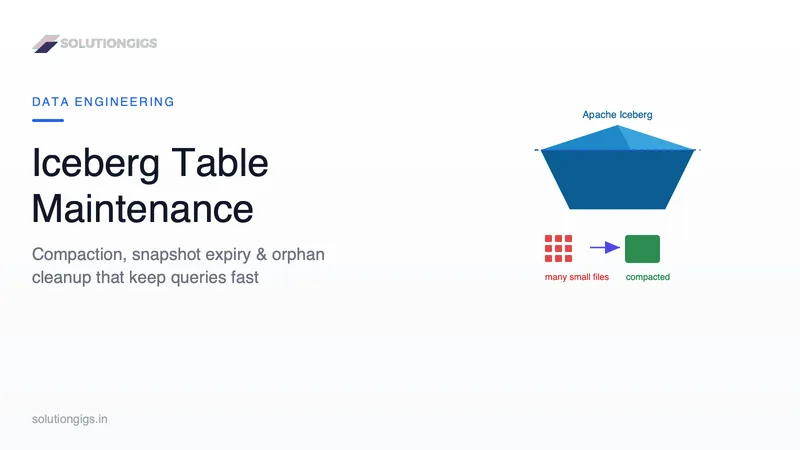
Apache Iceberg Table Maintenance: Compaction & Cleanup
Your Iceberg table was fast for the first month. Now the same query takes 4x longer and your S3 bill quietly doubled — and nobody changed the code. The table just accumulated the cost of every write: thousands of small files, a snapshot per commit, and bloated metadata. This guide covers the four maintenance jobs (compaction, expire_snapshots, remove_orphan_files, rewrite_manifests), the exact Spark SQL, the order they must run in, and the retention gotchas that can silently delete your ability to roll back.
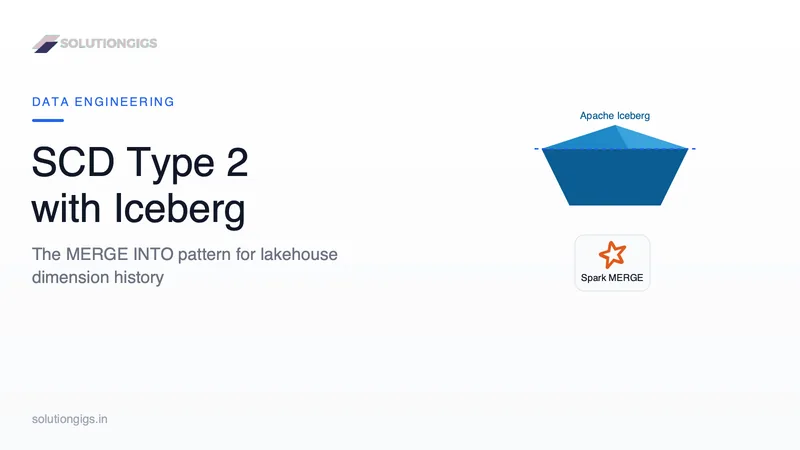
SCD Type 2 with Apache Iceberg MERGE INTO Explained
Overwrite a dimension value and the old truth is gone forever. SCD Type 2 preserves it — and Apache Iceberg finally makes it practical on a data lake with atomic MERGE INTO. This hands-on guide covers the one-MERGE gotcha (why closing the old row and inserting the new one needs the union trick), hash-based change detection, idempotency, and how Iceberg snapshots give you a second history layer. Real Spark SQL + PySpark.
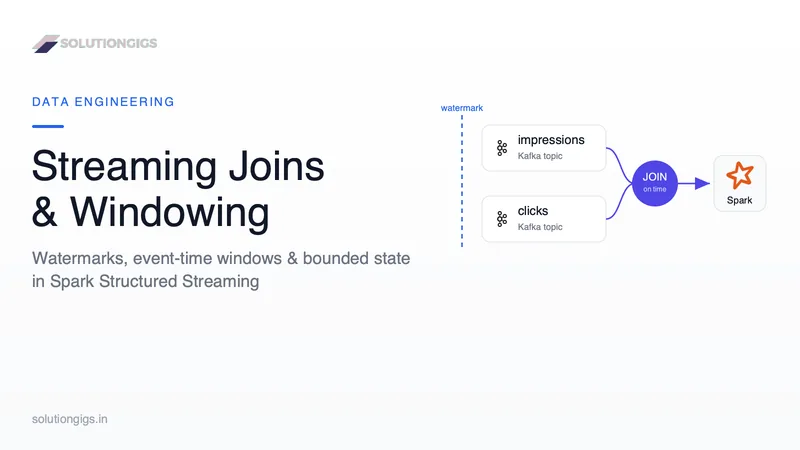
Streaming Joins & Windowing in Spark Structured Streaming
Stream-stream joins and windowing in Spark Structured Streaming run fine for an hour, then the executors start OOMing. The cause is almost never the join logic — it is unbounded state, because Spark was never told when it is safe to forget old data. This guide covers event-time windows (tumbling, sliding, session), how watermarks bound state, and how to keep stream-stream joins from buffering forever — with real PySpark + Kafka code.
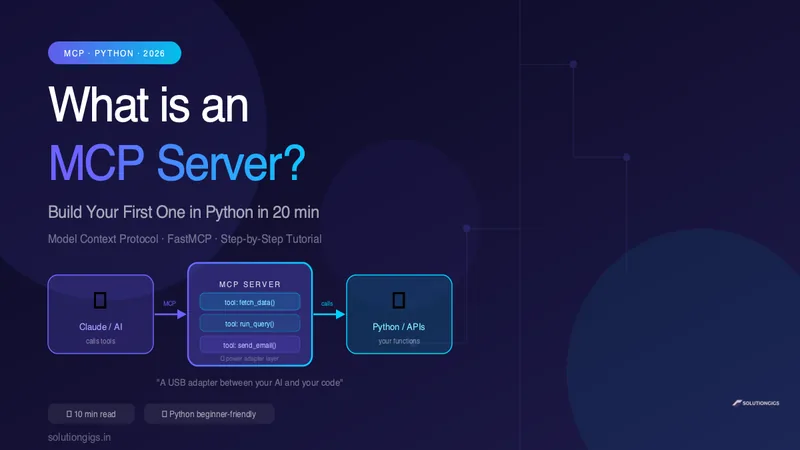
What Is an MCP Server? Build Your First One in Python
Learn what an MCP server is in plain English and build your first one in Python in 20 minutes. Step-by-step FastMCP tutorial — no prior MCP experience needed.
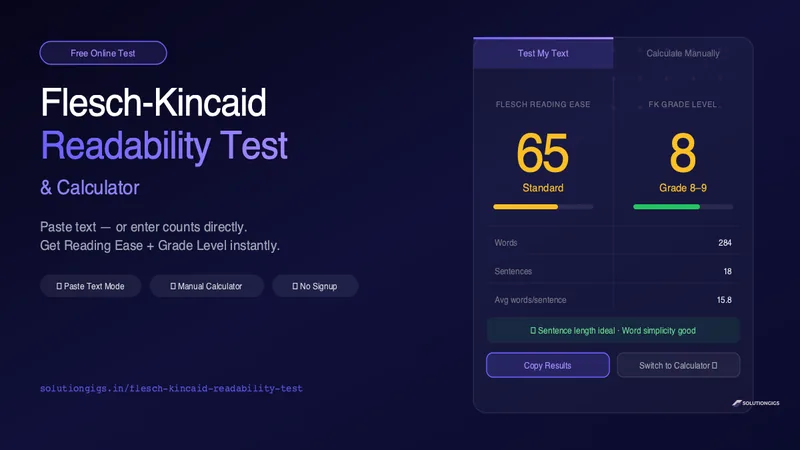
Flesch-Kincaid Readability Test Online — Free Calculator & Grade Level Guide
Complete guide to the Flesch-Kincaid readability test. Learn the formulas, score chart, grade level targets by content type, how to calculate manually, and how to improve your FK score — with a free online calculator.

Flesch Reading Ease Test Online — Free Score Calculator & Converter
Learn what the Flesch Reading Ease score means, how the 206.835 formula works, what scores to target by content type, and how to improve your writing with our free online Flesch Reading Ease test — no signup.
Datadog Synthetic Monitoring: The Complete Guide
Most teams find out their checkout is broken the same way: an angry customer, a support ticket, a revenue dip. By then it's been down for hours. Datadog Synthetic Monitoring flips that around — a robot logs in, adds to cart, and checks out every minute from five continents, and pages you the moment any step fails or slows. This in-depth guide covers it with real config examples: API tests vs browser tests, the assertion engine, multistep flows that log in and chain auth tokens, managed vs private (Docker) locations, alerting with retries and multi-location conditions that don't cry wolf, shift-left CI/CD gates with datadog-ci, linking a failed run to the backend APM trace, and the per-run cost model — so you catch outages, broken flows and SSL expiry before your users ever do.
Datadog RUM: Real User Monitoring Explained
Your server-side metrics can look perfect while users stare at a blank screen. p95 latency is 200ms, error rate is flat — and yet a slow third-party script, a layout shift, or a JavaScript exception is quietly ruining the experience on real devices. Datadog RUM (Real User Monitoring) closes that gap: a browser or mobile SDK measures what actual users experience — Core Web Vitals (LCP, INP, CLS), JS errors, slow resources, and every click — organized as sessions, views, actions, resources and errors. This guide covers the RUM data model, RUM vs APM vs Synthetic monitoring, browser-SDK setup, Session Replay, linking a user's click to the backend APM trace it triggered, and the session-based cost model (sessionSampleRate) that keeps the bill flat.
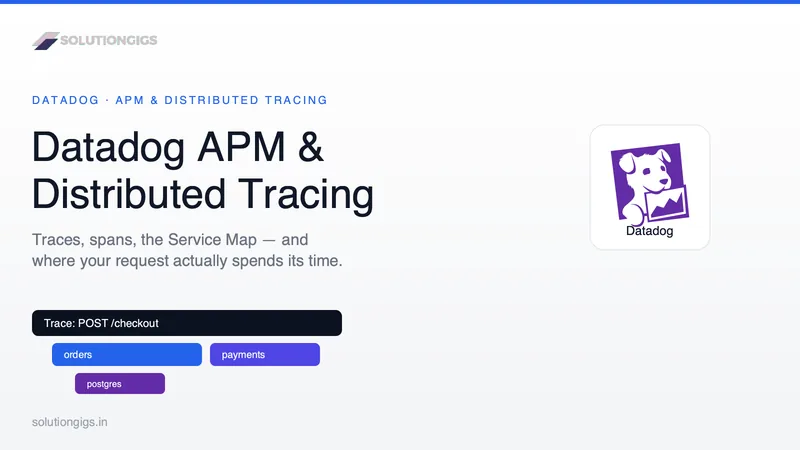
Datadog APM & Distributed Tracing: The Complete Guide
Metrics tell you the app is slow. Logs tell you what one process printed. Neither tells you where, across ten services, a request actually spent its time — and that's the question you're really asking in an incident. Datadog APM and distributed tracing answer it directly: a tracing library instruments your code to emit spans, Datadog stitches them into distributed traces, and you get flame graphs, a Service Map, and per-endpoint latency/error metrics. This guide covers the trace/span/service/resource data model, auto vs manual instrumentation with dd-trace, enabling APM on the Agent (port 8126), reading a flame graph and the Service Map, correlating traces with logs and metrics via trace_id and unified service tagging, alerting on RED metrics, and the sampling-and-retention cost model (head-based vs tail-based) that keeps the APM bill sane.
Datadog Log Management: The Complete Guide
Logs are the first thing engineers reach for in an incident and the first line item that blows up a monitoring budget. Datadog Log Management is powerful, but teams routinely index everything, watch the bill 5x, then rip logs out entirely — losing visibility to save money. The whole platform is built around one idea: decouple ingesting a log from making it searchable. This in-depth guide covers the full log lifecycle — collection and Agent config, pipelines and processors (grok parsing, remappers, the Sensitive Data Scanner), the Log Explorer and facets, indexes and exclusion filters, log-based metrics, archives and rehydration to cheap cloud storage, and a concrete ingestion-vs-indexing cost-control playbook so you can collect everything and still keep the bill flat.
Datadog Monitors & Alerting: The Complete Guide
Dashboards tell you something is wrong when you're looking. Datadog monitors tell you while you're asleep — which is exactly why bad ones are so destructive: a monitor that pages on every harmless blip trains your team to ignore alerts, so the one that matters gets swiped away at 3 AM. This guide covers Datadog monitors and alerting end to end: the monitor types (metric, anomaly, forecast, outlier, log, APM, composite, watchdog), how to create one with Warning/Alert thresholds and an evaluation window, thresholds vs anomaly detection, composite monitors, notification routing with @slack/@pagerduty, and a concrete playbook for killing alert fatigue by tying every alert to an SLO and a runbook.
Datadog Dashboards: Build, Template & Best Practices
Most teams have plenty of Datadog dashboards — what they don't have is dashboards anyone opens during an incident. The difference isn't more widgets, it's structure: template variables that make one board serve every service, a top-down layout that answers the first question in five seconds, and ruthless focus. This guide covers the two board types (timeboard vs screenboard), how to create a dashboard step by step, which widget types to use when, template variables (the feature that separates pros from beginners), managing dashboards as code with Terraform, and the best practices and mistakes that decide whether a board gets used or becomes wall art.
How to Install the Datadog Agent on Linux, Docker & Kubernetes
The Datadog Agent install is usually a five-minute job — unless you set the wrong DD_SITE, in which case the Agent runs happily and ships your data into the void. This copy-paste guide covers installing the Datadog Agent the right way on Linux (one-line script), Docker (gcr.io/datadoghq/agent:7 with the socket and host mounts), and Kubernetes (Helm chart / Operator as a DaemonSet), how to verify it's actually reporting with datadog-agent status and the Infrastructure list, the three causes behind 90% of 'installed but no data' problems, and how to keep custom-metric cost from surprising you on day one.
Docker vs Podman: Should You Switch? The Complete Comparison
Podman promises the same commands and images as Docker, but with no root daemon and no Docker Desktop license — so is it a real replacement or a lateral move with hidden costs? This comparison cuts through it: the daemon-vs-daemonless architecture that drives every other difference, rootless security defaults, what actually breaks when you move Docker Compose workflows to podman-compose or Quadlet, Kubernetes alignment (podman generate kube), performance, licensing, and a clear decision framework for when to switch, when to stay, and when to run both side by side.
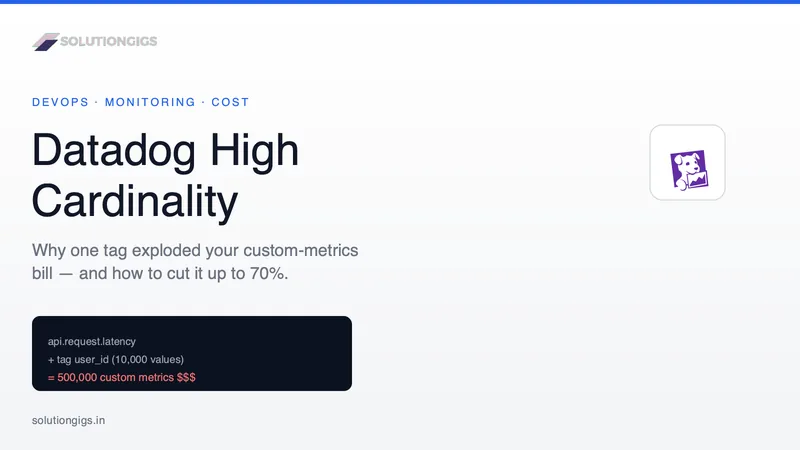
Datadog High Cardinality: Why Your Custom-Metrics Bill Exploded
Open a Datadog invoice and find custom metrics dwarfing everything else? The culprit is cardinality — and almost always one or two tags. This is the mechanic made concrete: a custom metric is billed per unique combination of metric name and tag values, so one metric tagged by user_id (10,000 values) × endpoint × status isn't one metric, it's 500,000 billable ones. Includes how to find the offenders (Metrics Summary, Cardinality Explorer, Estimated Usage) and the fix that cuts cost up to 70% without losing a dashboard — Metrics without Limits plus disciplined tagging.
Data Pipeline Monitoring: The Complete Guide to Metrics, SLAs & Alerting
The worst data incidents are silent: the job is green, the DAG is all checkmarks, and the dashboard has been wrong for three days. Data pipeline monitoring asks the harder question — is the data fresh, complete, correct, and on time? This pillar guide covers the four signals to track (freshness, volume, quality, system health), how to set data SLAs/SLOs/SLIs with error budgets, the tooling landscape, how to alert without drowning in noise, and how to stop high-cardinality custom metrics from exploding your monitoring bill.
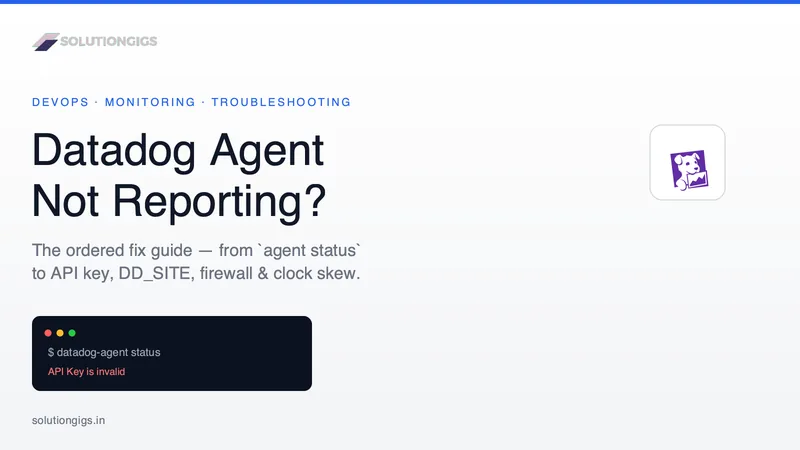
Datadog Agent Not Reporting? The Ordered Fix Guide
Most "my Datadog agent isn't sending metrics" guides hand you an unordered pile of things to check. This one gives you the diagnostic order: run datadog-agent status and read the Forwarder, then work six causes top to bottom — agent up/crashloop, API key valid, correct DD_SITE, outbound 443 connectivity, NTP clock skew, cardinality — with the exact failure signature and fix for each. The two that catch nearly everyone (invalid key, wrong site) look perfectly healthy from systemctl, which is why you read the Forwarder instead.
Datadog Databricks Monitoring: Setup, Metrics & Cost
Most Databricks-with-Datadog guides describe one integration and call it done — so people set up the Agent and can't see cost, or connect the API tile and can't debug an OOM. This is the both-halves guide: the in-cluster Agent via init script (driver mode) for real-time Spark and node health, the account-level OAuth integration for jobs and DBU cost from System Tables, how they fit together, and the idle-cluster alert that's the fastest monitoring ROI a Databricks shop will ever get.
Datadog Kafka Lag Monitoring: Metrics & Alerts
Kafka consumer lag is the most important number you're probably monitoring wrong. This is the practitioner's guide: offset lag vs time lag (and why time lag is the better SLO), the three ways to get lag into Datadog with honest trade-offs, the exact kafka_consumer check config, a dashboard that surfaces which group is actually falling behind, and alerts that fire on rate-of-change — not on an absolute count that pages you at 3 AM for a benign spike.
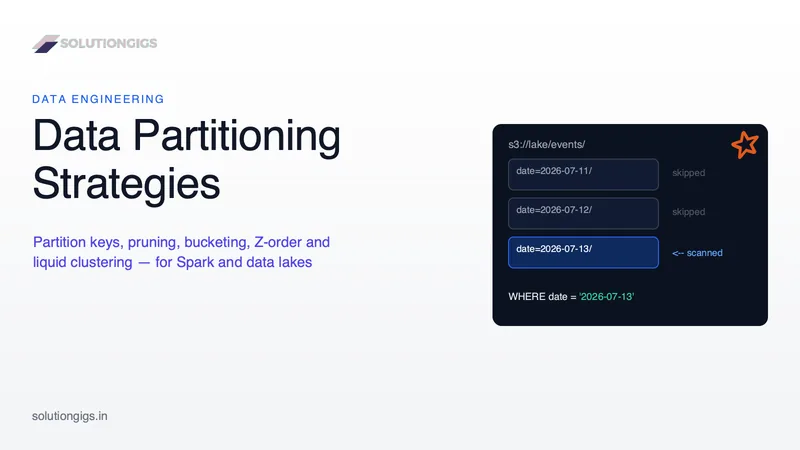
Data Partitioning Strategies for Spark & Data Lakes
Partitioning is the highest-leverage decision you make about a table: get it right and queries prune to seconds, get it wrong and you invent 2 million tiny files. Learn how partition pruning works, how to pick a key (date, ~1 GB minimum per partition), why tables under 1 TB shouldn't be partitioned at all, repartition vs partitionBy, and when bucketing, Z-order, liquid clustering, or Iceberg hidden partitioning beats directories — with real PySpark and decision rules.
Datadog Spark Monitoring: Metrics That Matter
Most Datadog Spark guides stop at 'paste this config' and leave you with 50 metrics you don't understand and a surprise bill. This is the practitioner's version: the exact Spark check setup for YARN, EMR, and Kubernetes (including the driver-IP gotcha), the 8 metrics that actually predict OOM, skew, GC storms, stalls, and failures, dashboards and alerts worth paging on, and the high-cardinality trap that quietly inflates your custom-metrics cost.
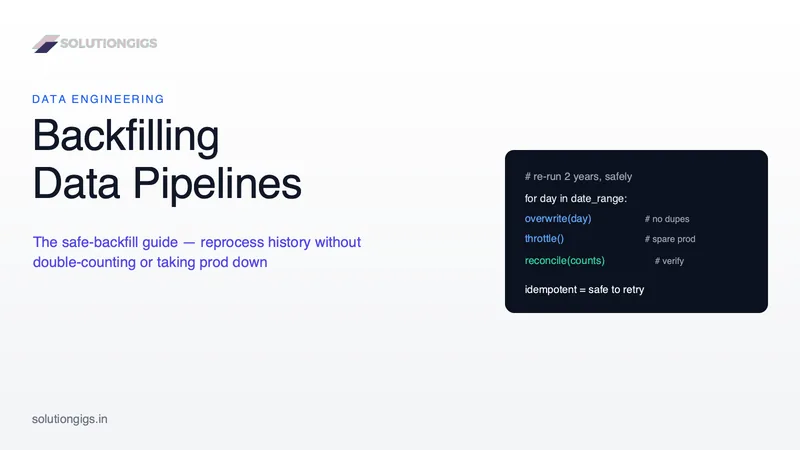
Backfilling Data Pipelines: The Safe Backfill Guide
Someone re-runs three months to add a column, the job appends instead of overwrites, and Monday's dashboard shows 4x the real revenue. Backfilling is one of the most common tasks in data engineering and the least documented. Learn what a backfill is, why they double-count and take prod down, and the four-step safe-backfill playbook — idempotent writes, parameterized date ranges, throttling, Airflow catchup vs backfill, and reconciliation — with real PySpark, SQL and Airflow.
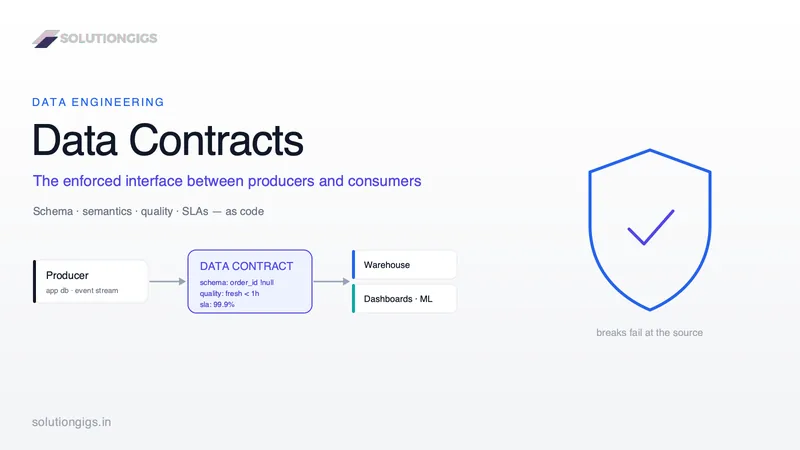
Data Contracts in Data Engineering: The Complete Guide
An upstream column rename shouldn't silently break your dashboard. A data contract is an enforced, version-controlled agreement between data producers and consumers — schema, semantics, quality and SLAs as code. Learn what data contracts are, the ODCS standard, a real YAML example, and the four ways to enforce them: dbt model contracts, schema registries, CI gates and quality tests.
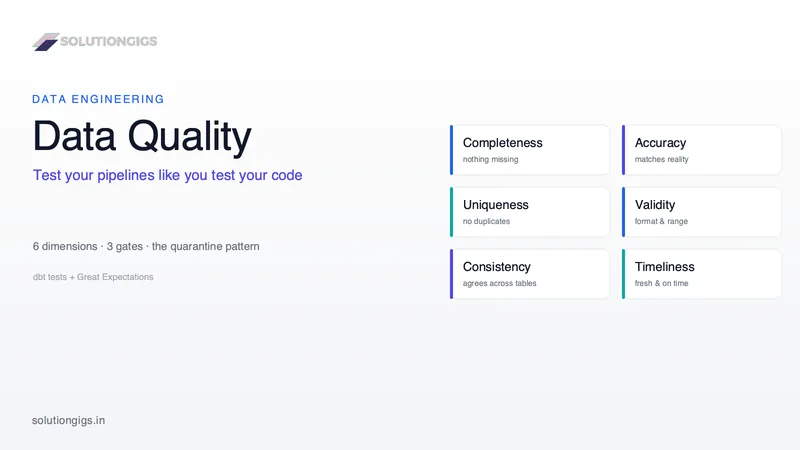
Data Quality: How to Test Your Data Pipelines (Complete Guide)
Bad data is silent until a dashboard is wrong. Learn to test your pipelines like you test your code: the six data quality dimensions, the three gates to place checks (ingestion, transformation, serving), the quarantine pattern, blocking vs warning severity, and dbt tests vs Great Expectations — with real PySpark, SQL, and YAML you can copy.
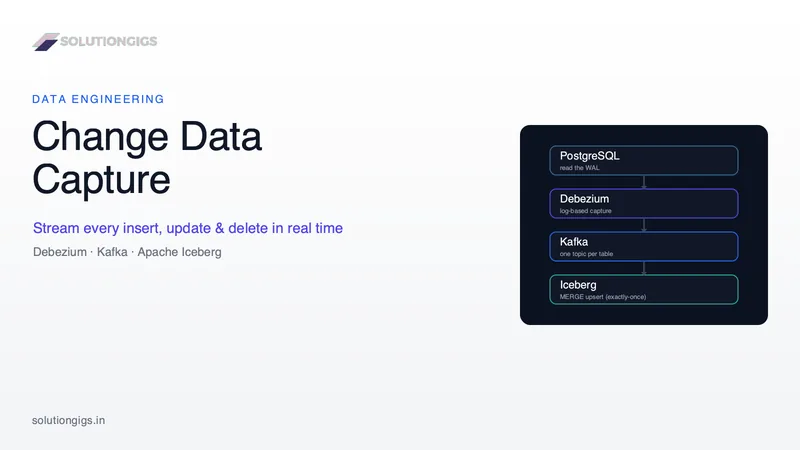
Change Data Capture (CDC) Explained: Debezium, Kafka & Iceberg
Change Data Capture streams every insert, update, and delete out of your database in real time by reading its transaction log — not polling. Learn log-based CDC with Debezium, Kafka Connect, and an Iceberg sink: full Postgres config, the MERGE that makes it exactly-once, schema-change handling, and the replication-slot gotcha that fills your disk.
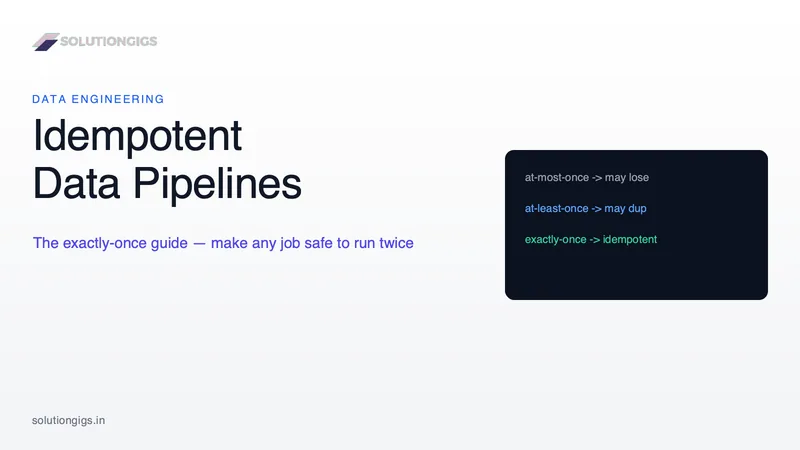
Idempotent Data Pipelines: The Exactly-Once Guide
Exactly-once delivery is a myth — it's provably impossible on a real network. What you actually build is exactly-once processing, and idempotency is how. Learn why your pipeline runs twice, and the four patterns that make any batch or streaming job safe to retry: deterministic partition overwrite, MERGE upserts, idempotency keys, and the transactional outbox — with real PySpark and SQL.
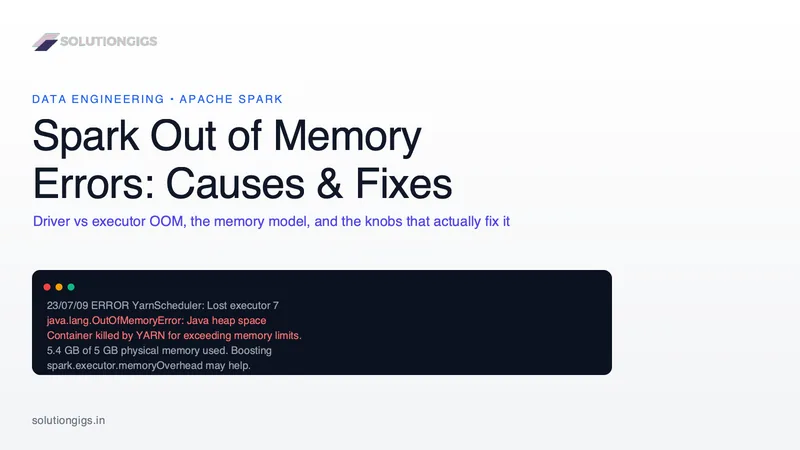
Spark Out of Memory Errors: Causes and Fixes
A Spark out of memory error is a diagnosis problem before it's a config problem — the same OutOfMemoryError can mean data skew, an overflowing off-heap region, or a collect() that dragged a billion rows into the driver. Learn to tell driver OOM from executor OOM, read the exact error message, and fix it with the right knob — partitions, memoryOverhead, or executor memory — with real PySpark code.
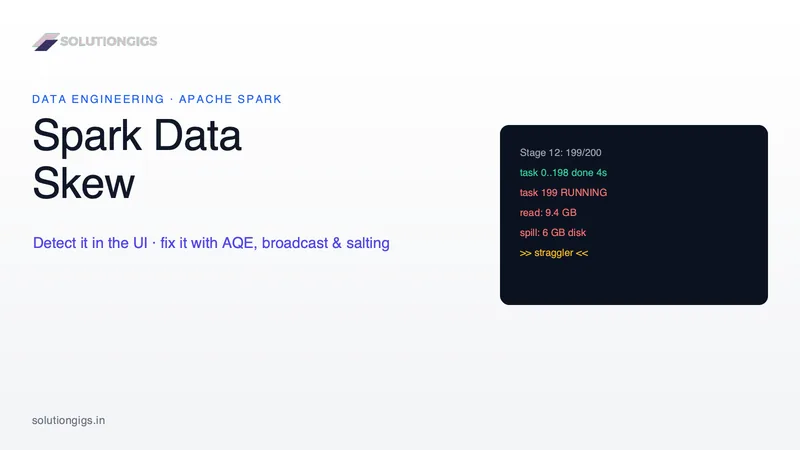
Spark Data Skew: How to Detect and Fix It
Data skew is the #1 hidden cause of slow Spark jobs — one hot key floods a single partition and stalls a whole stage at 99%. Learn how to detect skew in the Spark UI and fix it with AQE skew join, broadcast joins, null-key handling, and salting — with real PySpark code.
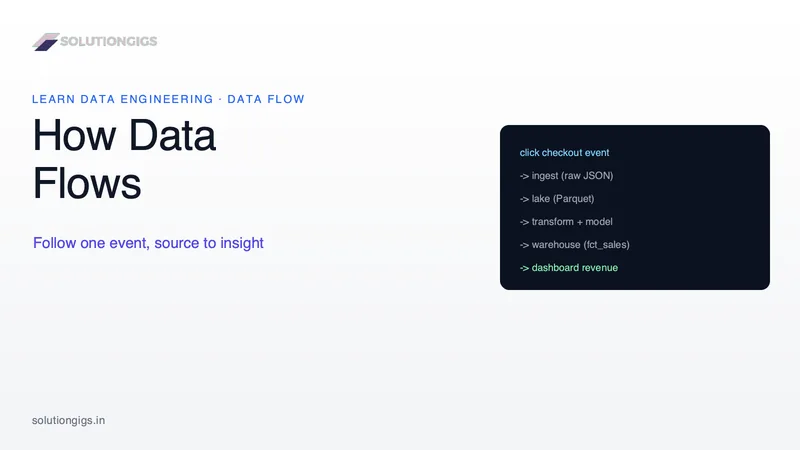
How Data Flows Through a Data Engineering Pipeline
Follow one checkout event as it flows through a data engineering pipeline — source, ingest, lake, transform, model, and serve — changing shape at every stage until it is a number on a dashboard.
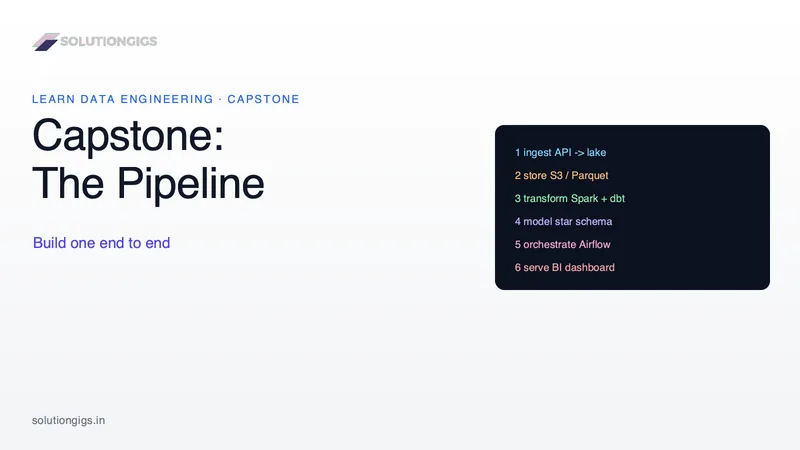
Capstone: Build an End-to-End Data Pipeline
A capstone project to build an end-to-end data pipeline — ingest, store, transform, model, orchestrate, and serve — tying together SQL, Python, Spark, modeling, and Airflow.
Data Engineering on AWS: S3, EMR & Glue
Data engineering on AWS explained — how S3, Glue, EMR, Athena, and Redshift fit together into a data pipeline, what each service does, and when to use which.
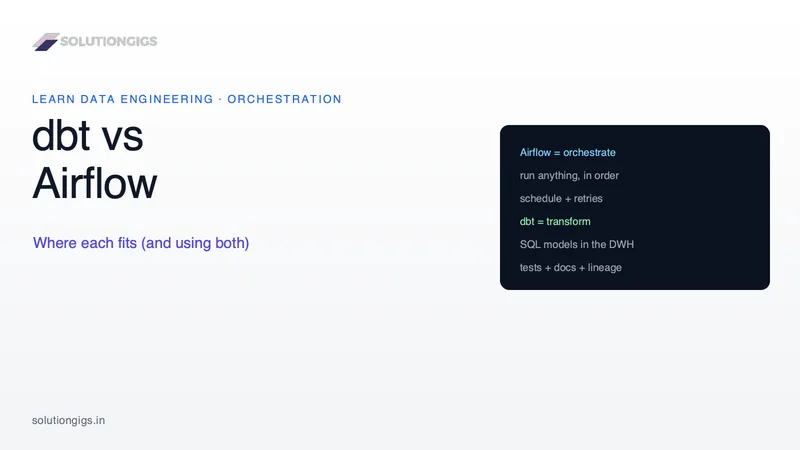
dbt vs Airflow: Where Each Fits
dbt vs Airflow explained — why they solve different problems (transformation vs orchestration), when to use each, and how teams use them together, with a clear decision guide.
Apache Airflow Fundamentals: DAGs Explained
Apache Airflow fundamentals — what a DAG is, tasks and operators, dependencies, scheduling, retries, and how the scheduler and executor run your data pipelines, with code.
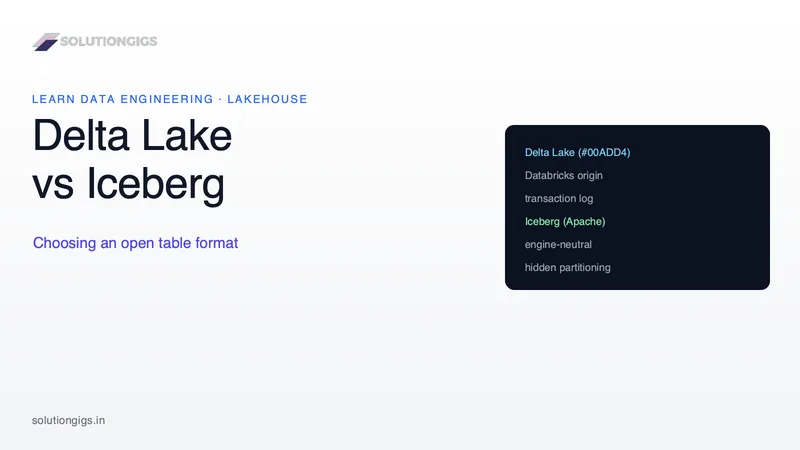
Delta Lake vs Iceberg: How to Choose
Delta Lake vs Apache Iceberg compared — architecture, features, ecosystem, and a clear decision guide for choosing an open table format for your lakehouse in 2026.
Kafka Fundamentals: Topics, Partitions & Offsets
Kafka fundamentals explained — topics, partitions, offsets, producers, consumers, and consumer groups, with the mental model you need to build real streaming pipelines.
PySpark Fundamentals: DataFrames & Transformations
PySpark fundamentals for data engineers — DataFrames, transformations vs actions, lazy evaluation, and the core operations (select, filter, groupBy, join) with runnable code.
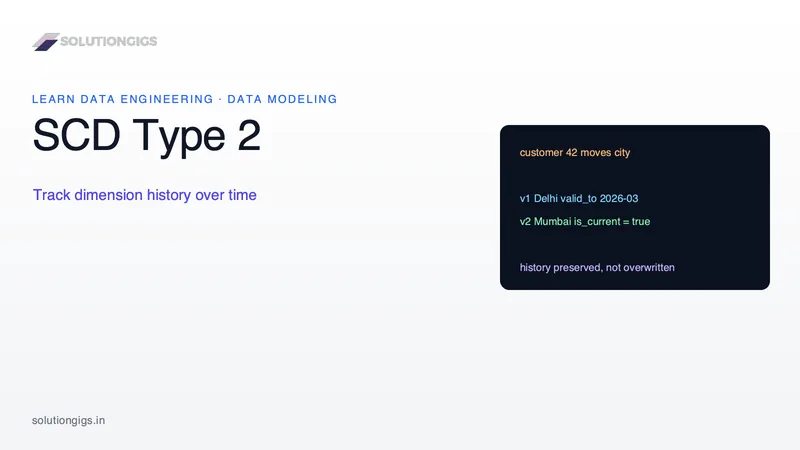
Slowly Changing Dimensions (SCD Type 2) Explained
Slowly Changing Dimensions (SCD Type 2) explained — track dimension history with valid_from, valid_to and is_current, the SCD types compared, and SQL to implement it.
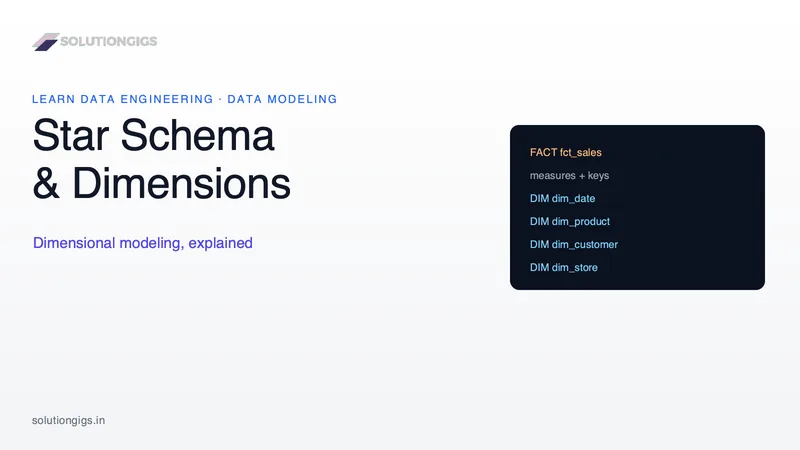
Dimensional Modeling & Star Schema Explained
Dimensional modeling and the star schema explained — fact vs dimension tables, grain, keys, star vs snowflake, and a step-by-step design method with SQL examples.
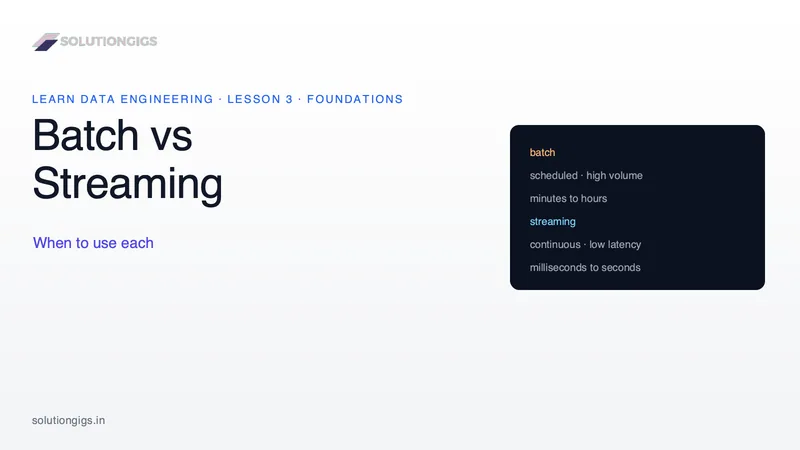
Batch vs Streaming: When to Use Each (Complete Guide)
Batch vs streaming data processing explained — the real differences, latency and cost trade-offs, micro-batching, and a decision framework for when to choose each in 2026.
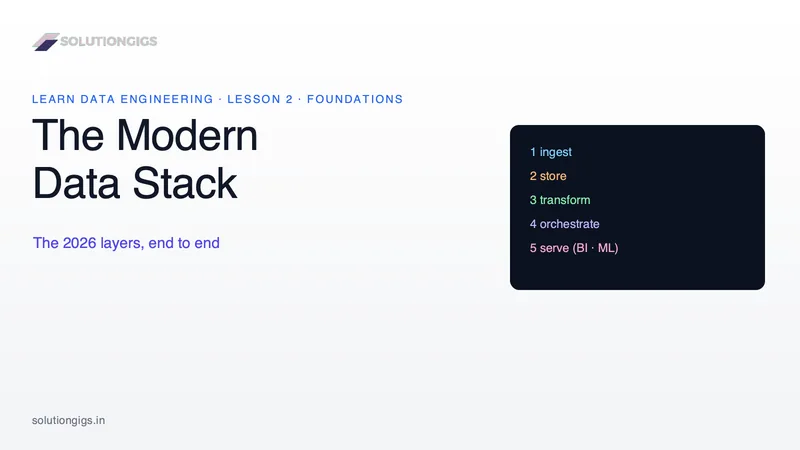
The Modern Data Stack: A Complete Guide
The modern data stack in 2026 explained — the five layers (ingest, store, transform, orchestrate, serve), the leading tools in each, and how a cloud warehouse and ELT tie it all together.
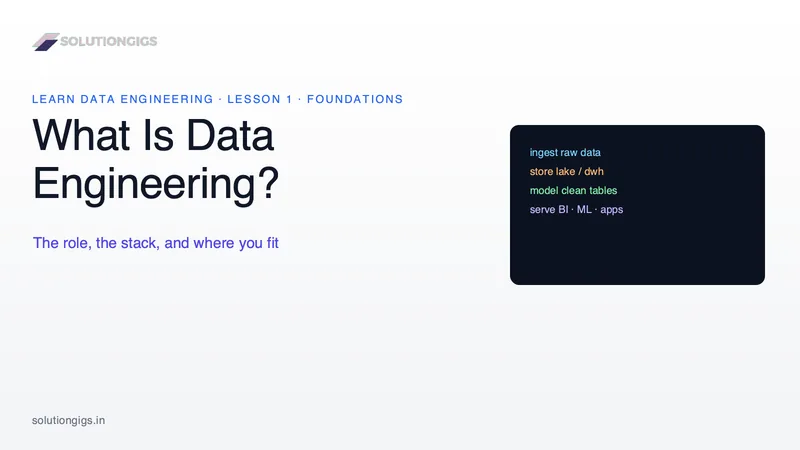
What Is Data Engineering? The Role Explained
What is data engineering? A clear explanation of the role — what a data engineer does day to day, the tools they use, how it differs from data science and analytics, and how to start.
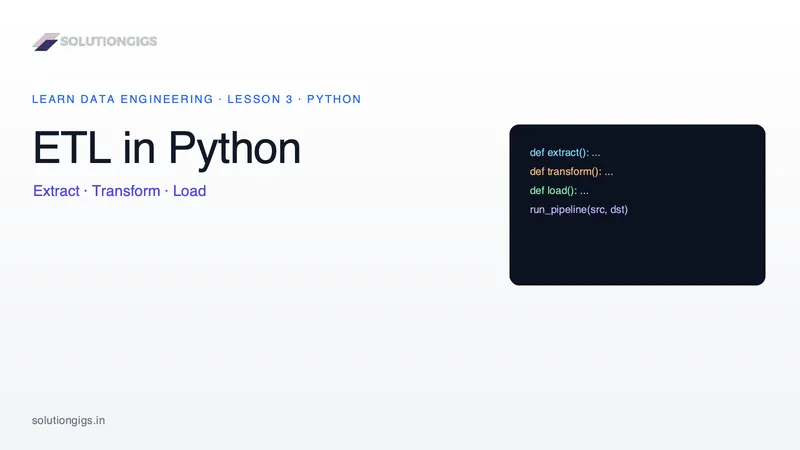
Build Your First ETL Pipeline in Python (Tutorial)
Build your first ETL pipeline in Python step by step — extract from CSV, transform and clean with pandas, and load to Parquet or a database, with a full runnable script and best practices.
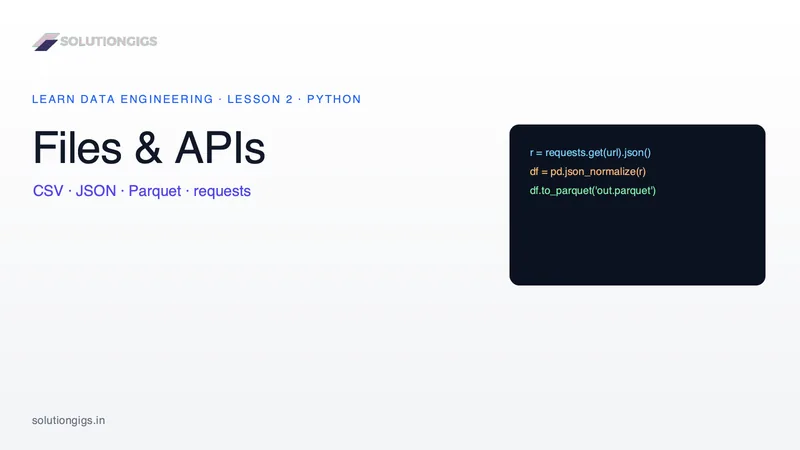
Python: Read Files, APIs & JSON into a DataFrame
Learn to load real data into Python — read CSV, JSON and Parquet files, call REST APIs with requests, and flatten nested JSON into a clean pandas DataFrame, with runnable examples.
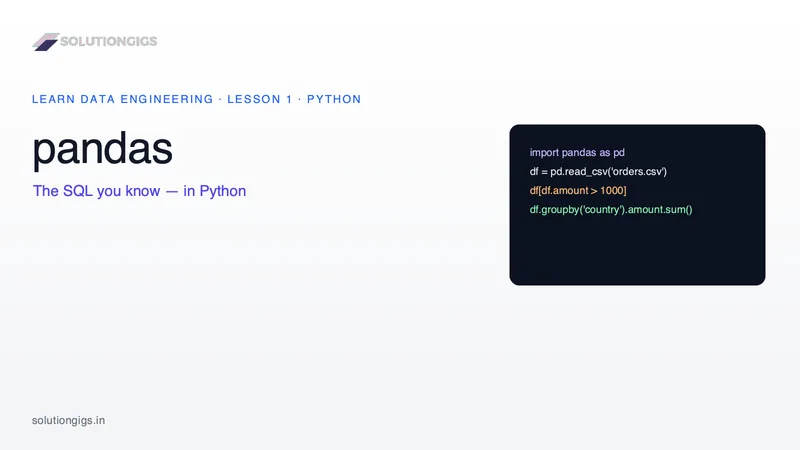
pandas Tutorial for Data Engineering: The Essentials
A pandas tutorial for data engineering — load, inspect, select, filter, and aggregate data in Python, mapped directly to the SQL you already know, with runnable examples.
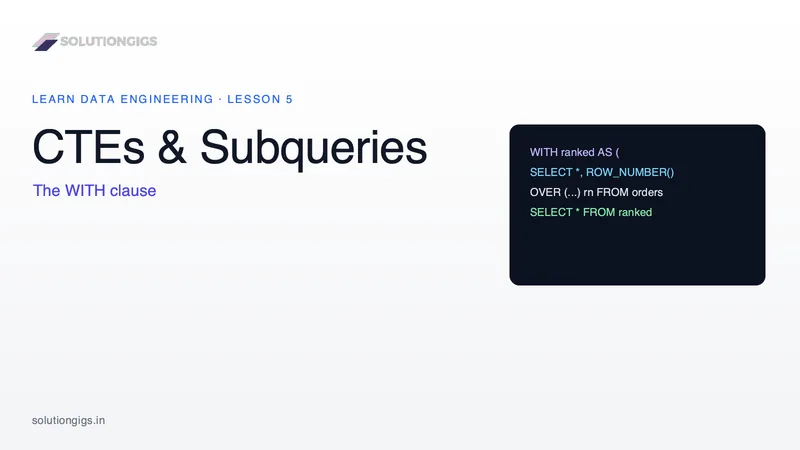
SQL CTEs & Subqueries Explained: WITH Clause Guide
SQL CTEs and subqueries explained — the WITH clause, subqueries vs CTEs, when to use each, and how to break complex queries into clean, readable steps, with real examples and exercises.
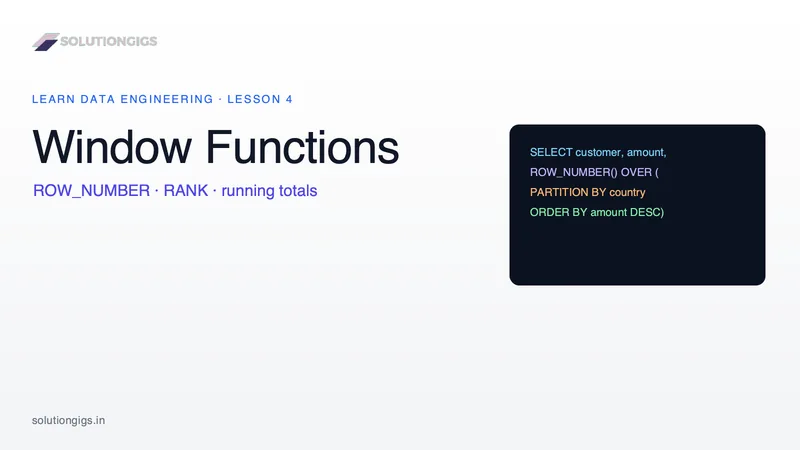
SQL Window Functions Explained: ROW_NUMBER, RANK & More
SQL window functions explained simply — ROW_NUMBER, RANK, running totals, and per-group calculations that keep every row. OVER, PARTITION BY, and ORDER BY with real examples.
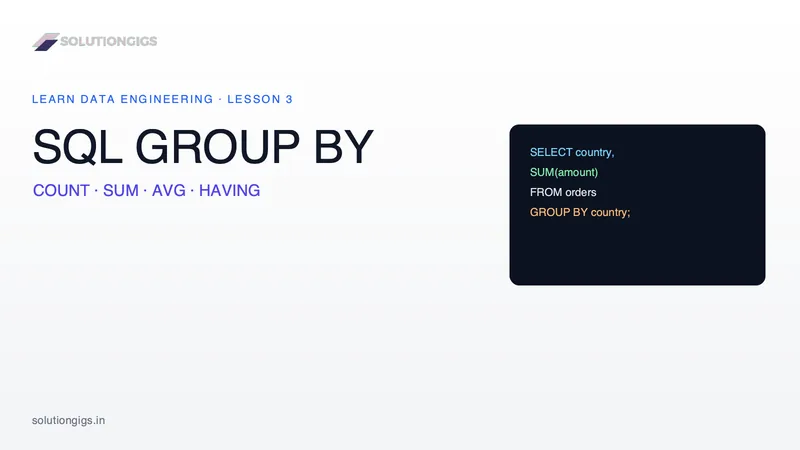
SQL GROUP BY & Aggregations: COUNT, SUM, AVG
Learn SQL GROUP BY and aggregate functions — COUNT, SUM, AVG, MIN, MAX — how grouping works, HAVING vs WHERE, and the execution order, with one real dataset and exercises.
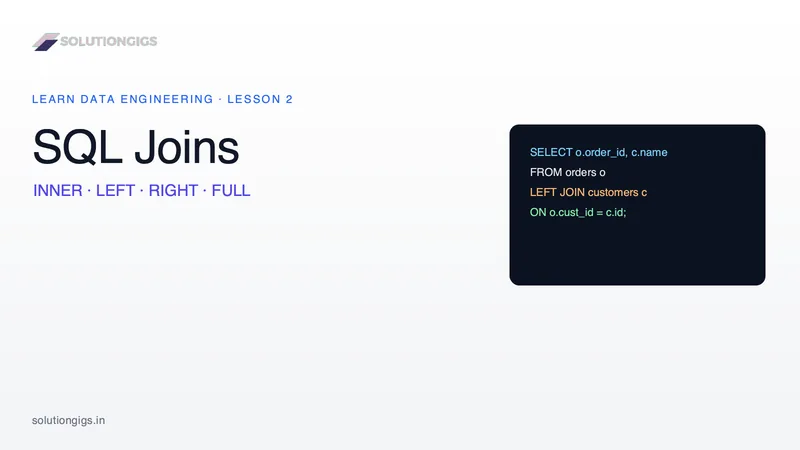
SQL Joins Explained: INNER, LEFT, RIGHT & FULL
SQL joins explained with one real dataset — INNER, LEFT, RIGHT, and FULL joins, when to use each, what happens to unmatched rows, common mistakes, and exercises.
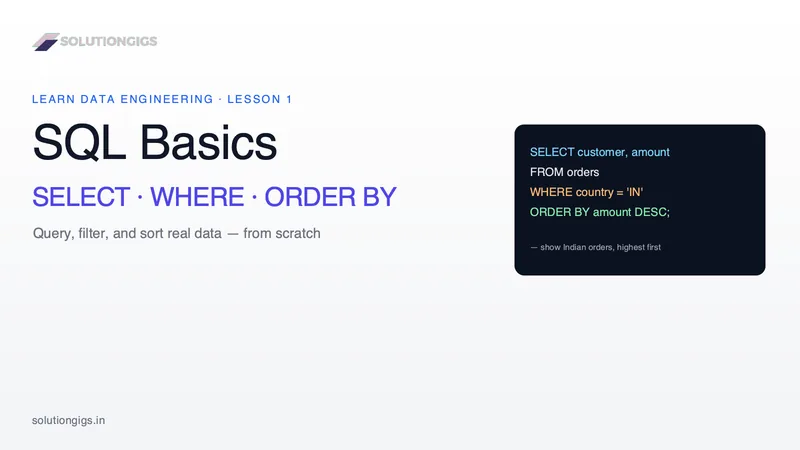
SQL SELECT, WHERE & ORDER BY: A Beginner's Guide
Learn SQL SELECT, WHERE, and ORDER BY from scratch — how to query, filter, and sort data — with one real dataset, runnable examples, exercises, and the execution order most beginners get wrong.
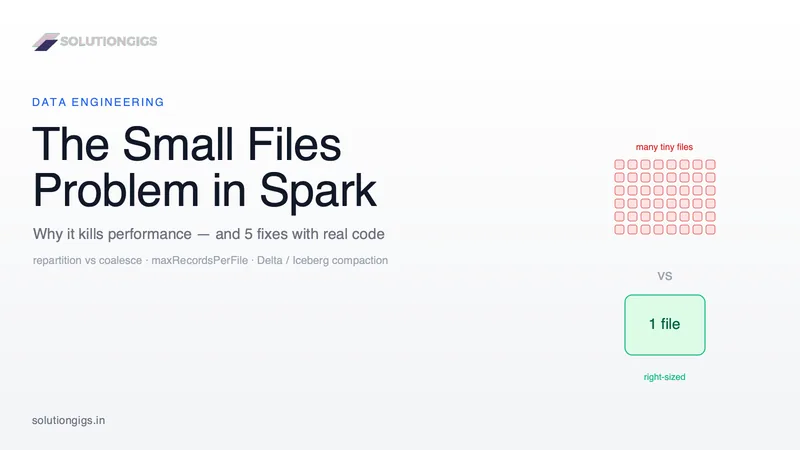
Spark Small Files Problem: Causes & How to Fix It
The Spark small files problem quietly wrecks query speed and inflates cloud bills. Learn why it happens, how to detect it, and 5 proven fixes with real code — repartition vs coalesce, maxRecordsPerFile, AQE, and Delta/Iceberg compaction.
Kafka vs RabbitMQ: Which to Use (With Real Code)
Kafka vs RabbitMQ in 2026 — the real difference between a log and a queue, throughput benchmarks, producer/consumer code for both, failure modes, and a clear decision framework for choosing a message queue.
AWS vs GCP vs Azure for Startups: Which to Pick
AWS vs GCP vs Azure for startups in 2026 — startup credits compared, real pricing, provider strengths, and a clear decision framework to pick the right cloud without vendor lock-in.
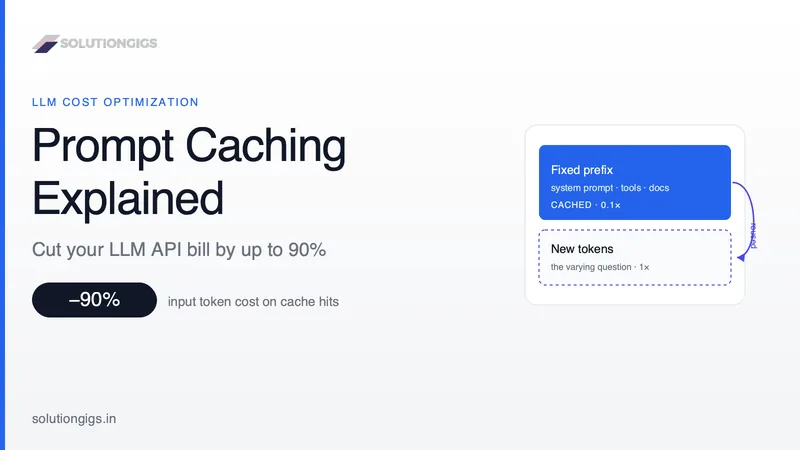
Prompt Caching Explained: Cut LLM API Costs Up to 90%
Prompt caching cuts LLM API costs up to 90% and speeds up responses. Learn how it works, Claude vs OpenAI vs Gemini pricing, real cost math, and how to fix cache misses.
Claude vs GPT vs Gemini: Which LLM for Which Job
Claude vs GPT vs Gemini in 2026 — the real strengths of each LLM, a job-by-job recommendation table, a pricing snapshot, and a clear framework for choosing the right model.
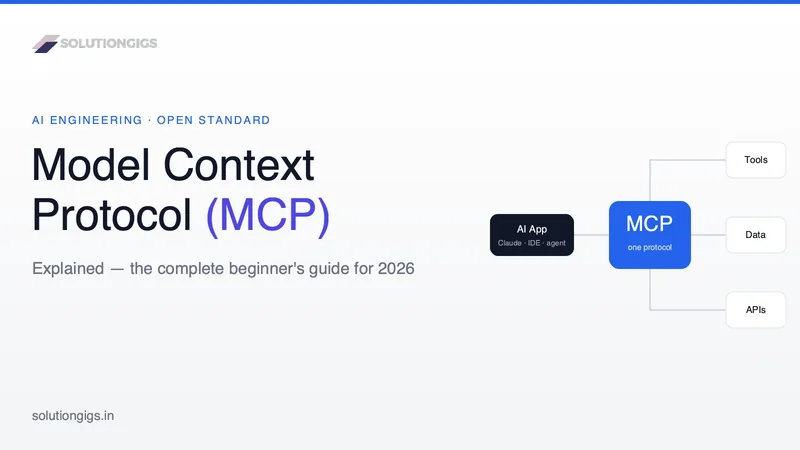
Model Context Protocol (MCP) Explained: The Complete Beginner's Guide
New to the Model Context Protocol? This beginner's guide explains what MCP is, how it works, why it matters for AI in 2026, and how to get started fast.
10 Free AI Developer Tools (No Signup)
10 free AI developer tools with no signup — generate SQL, Docker Compose, Kubernetes YAML, Terraform, MCP servers, READMEs and more from plain English. Try them free.
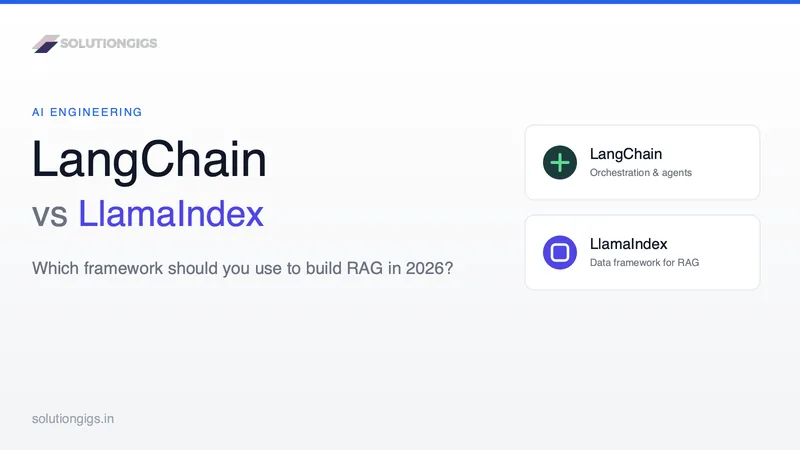
LangChain vs LlamaIndex: Which to Use for RAG
LangChain vs LlamaIndex — the real differences, when each wins for RAG and agents, code examples, and a clear framework for choosing the right LLM framework in 2026.
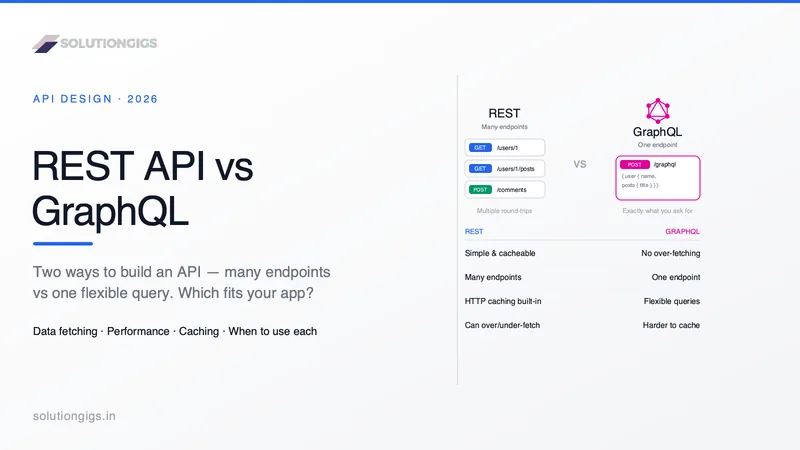
REST API vs GraphQL: Differences & When to Use Each
REST API vs GraphQL — the real differences, performance and caching trade-offs, code examples, and a clear framework for choosing the right API style in 2026.
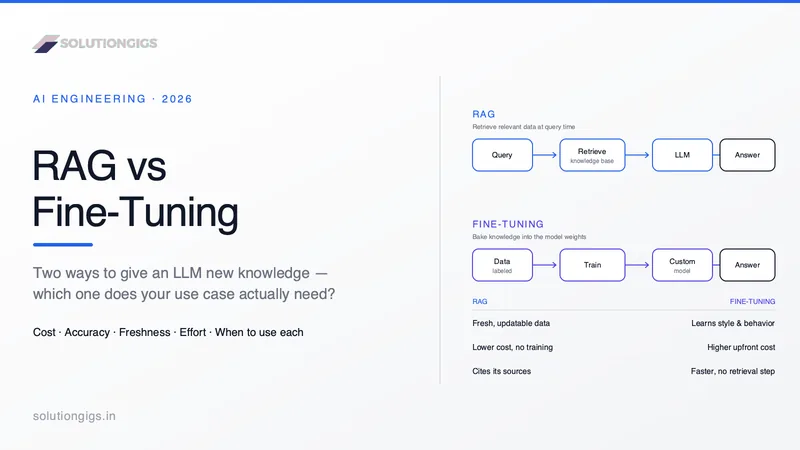
RAG vs Fine-Tuning: Which to Use for Your LLM App
RAG vs fine-tuning explained — the real difference, cost and accuracy trade-offs, and a clear decision framework for choosing how to give your LLM new knowledge in 2026.
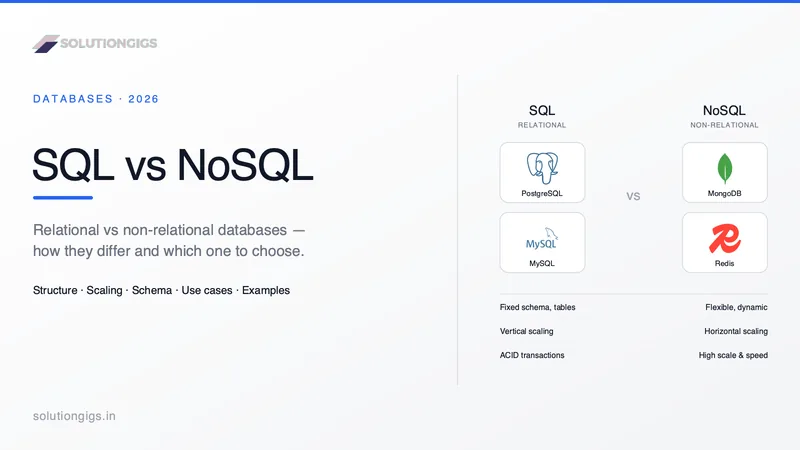
SQL vs NoSQL: Differences, Examples & When to Use Each
SQL vs NoSQL explained simply — the real differences between relational and non-relational databases, examples, scaling, and a clear framework for choosing the right database in 2026.
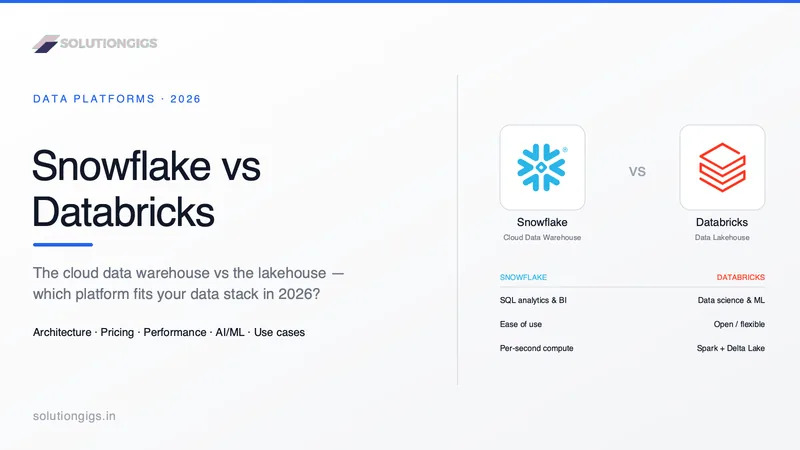
Snowflake vs Databricks: Which Data Platform Wins?
Snowflake vs Databricks in 2026: warehouse vs lakehouse compared on architecture, pricing, performance and AI/ML — plus a clear rule for which one to pick.
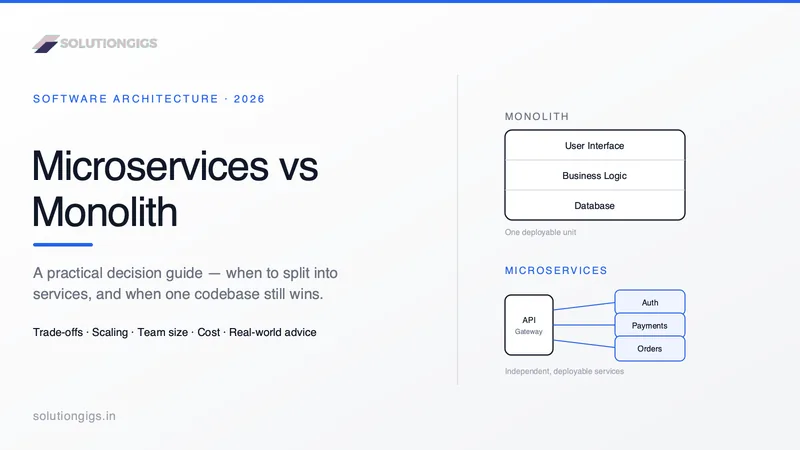
Microservices vs Monolith: Which to Choose (Full Guide)
Microservices vs monolith — which architecture should you choose? A practical 2026 decision guide covering trade-offs, scaling, team size, cost, and when a monolith still beats microservices.
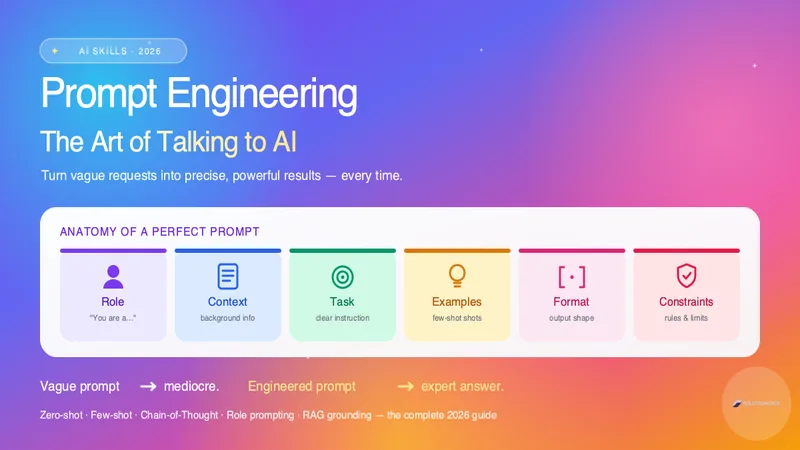
Prompt Engineering: The Complete Guide to Talking to AI
Master prompt engineering in 2026. Learn the anatomy of a perfect prompt, zero-shot vs few-shot, chain-of-thought, role prompting, and 12 proven techniques to get expert results from ChatGPT, Claude, and Gemini.
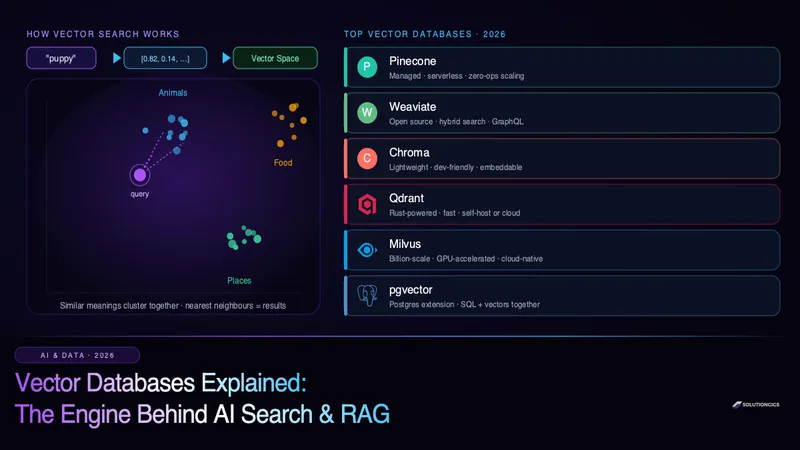
Vector Databases Explained: The Engine Behind AI Search & RAG
What is a vector database and why does every AI app need one? Learn how embeddings, similarity search, and vector DBs power RAG — plus a comparison of Pinecone, Weaviate, Chroma, Qdrant, Milvus and pgvector.
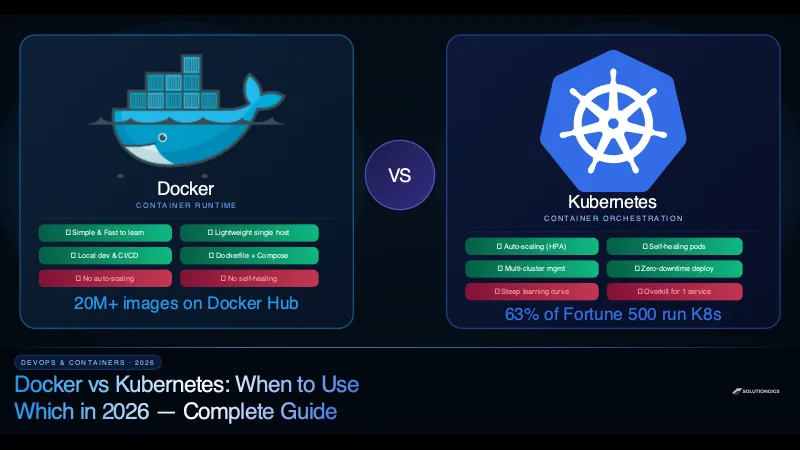
Docker vs Kubernetes: When to Use Which — Complete Guide
Docker and Kubernetes are not competitors — they solve different problems. Learn exactly when to use Docker alone, when to bring in Kubernetes, and how they work together in 2026.
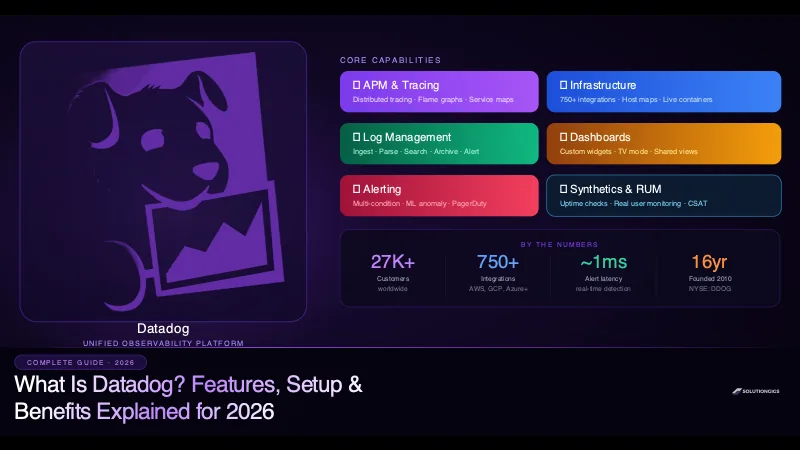
What Is Datadog? Features, Pricing & Setup (Complete Guide)
What Datadog is, how it works, and how to set it up — core features, honest pricing, and hands-on Python & Java video tutorials for sending custom metrics.
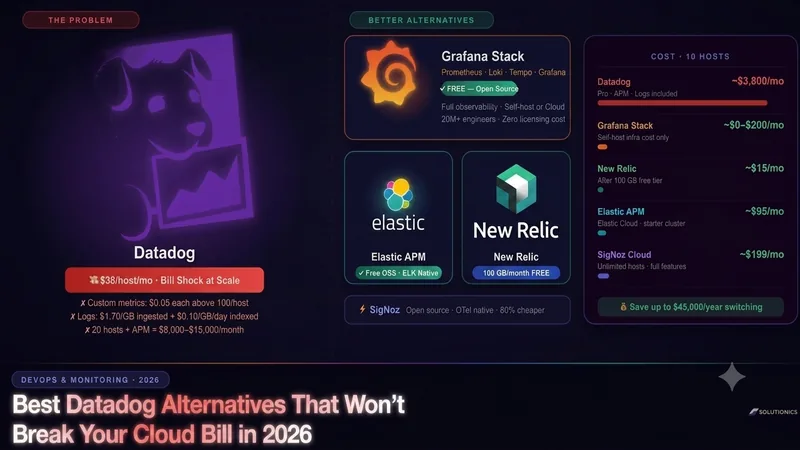
Best Datadog Alternatives: Cut Your Monitoring Bill by 70%
Datadog too expensive? Compare Grafana Stack, New Relic, Elastic APM, and SigNoz with real pricing, honest trade-offs, and a 4-week migration playbook.
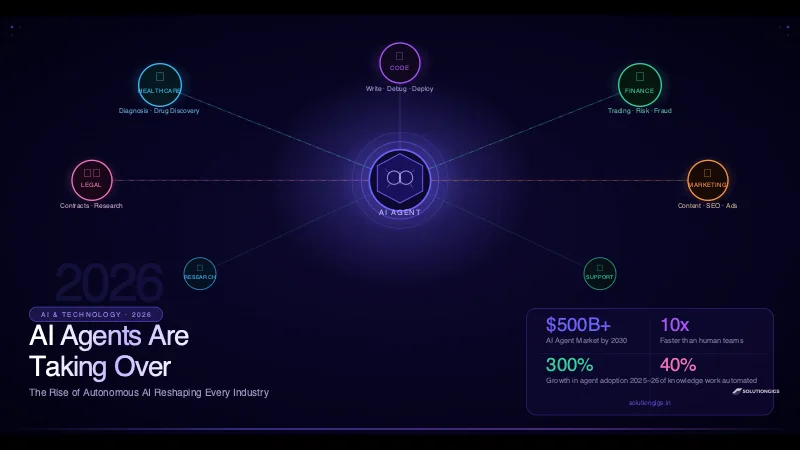
AI Agents: How Autonomous AI Is Changing the World
AI agents are autonomously handling healthcare, finance, legal, and software tasks in 2026. Learn how they work, which industries they're transforming, the top platforms, and how to build your first agent.
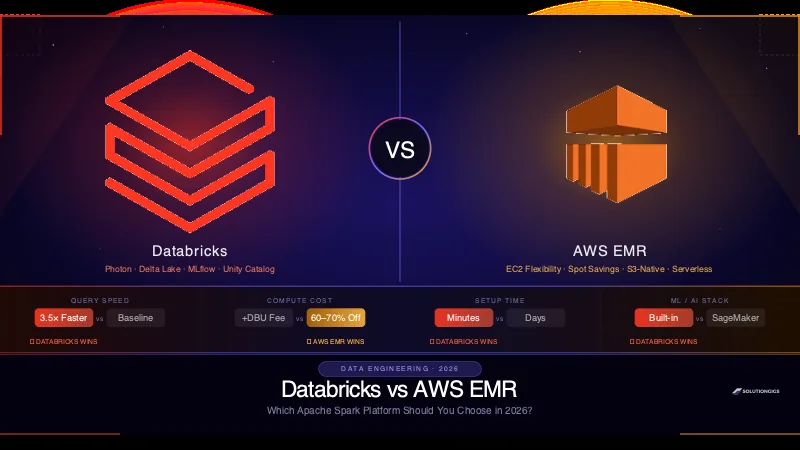
Databricks vs AWS EMR: Which Spark Platform Wins?
Databricks vs AWS EMR head-to-head across performance, cost, ML integration, and developer experience. Real cost modelling, a 5-question decision framework, and a clear verdict for 2026.
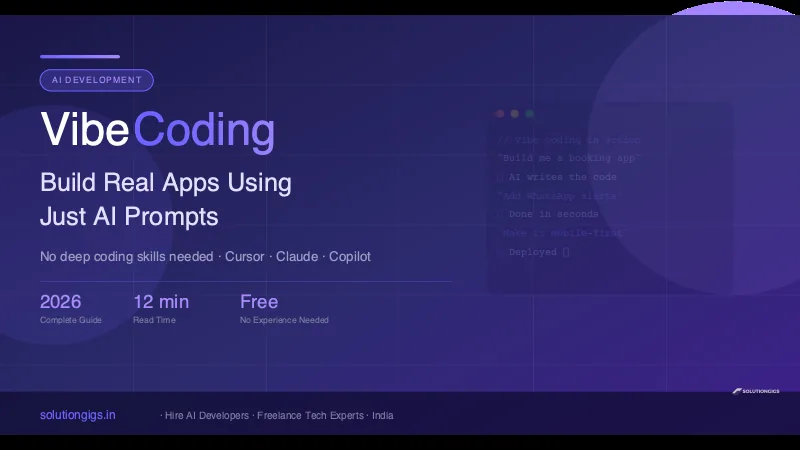
Vibe Coding: Build Apps With AI — Complete Guide
What is vibe coding? Learn how to build real apps using just AI prompts — no deep coding experience needed. Best tools (Cursor, Claude Code, Copilot), step-by-step guide, real examples, and how Indian freelancers are earning with vibe coding in 2026.
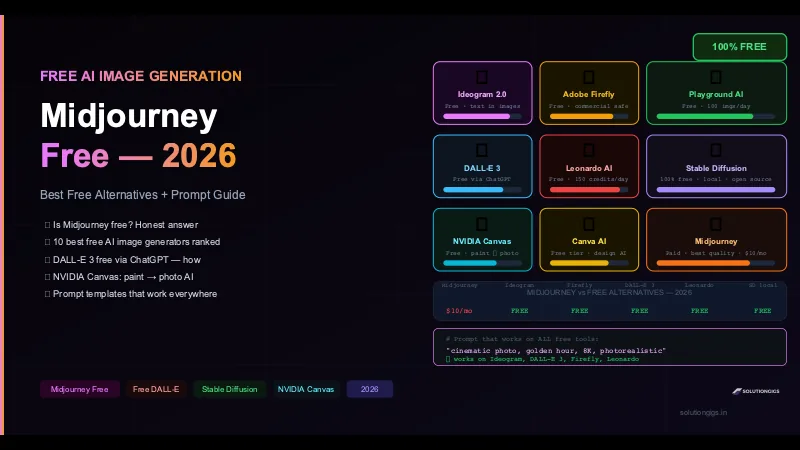
Midjourney: Is It Free? + 10 Best Free AI Image Generators
Is Midjourney free in 2026? Honest answer: no. But here are 10 free AI image generators that actually work — DALL-E 3, Ideogram, Adobe Firefly, Leonardo AI, Stable Diffusion, NVIDIA Canvas. Full prompt guide included.
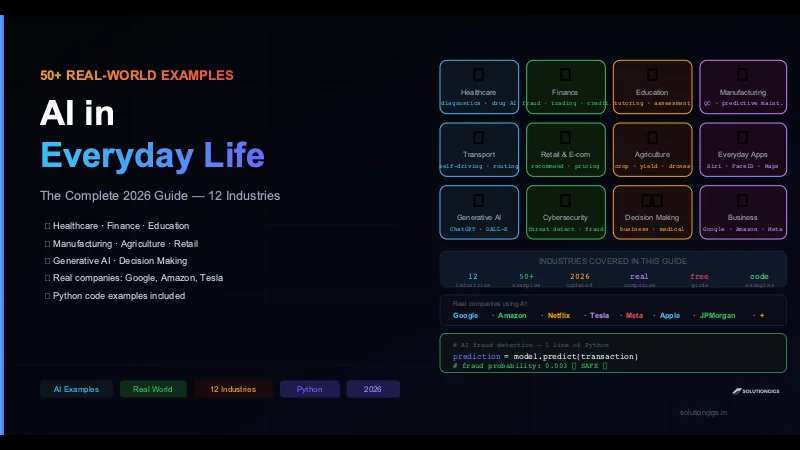
50+ Examples of AI in Everyday Life — The Complete Guide
50+ real examples of AI in everyday life across 12 industries — healthcare, finance, education, manufacturing, agriculture, retail, and generative AI. Real companies, how they work, and Python code included.
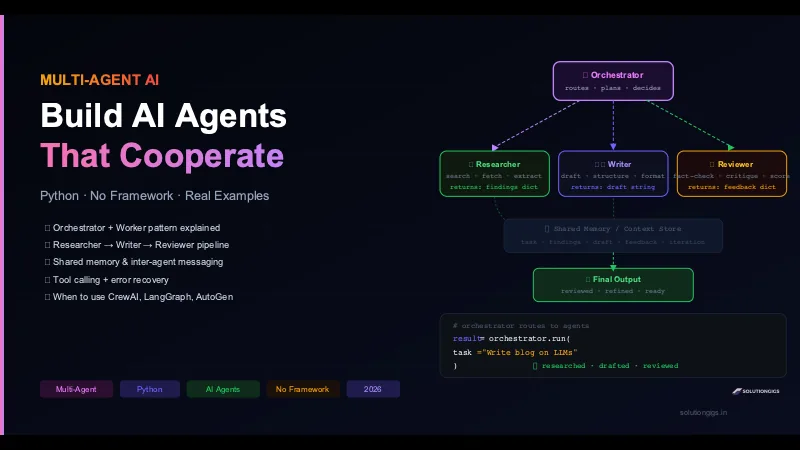
How to Build a Multi-Agent AI System in Python
Build a multi-agent AI system in Python from scratch — orchestrator, researcher, writer, and reviewer agents that cooperate. Includes parallel execution, tool calling, shared memory, and error recovery. No framework required.
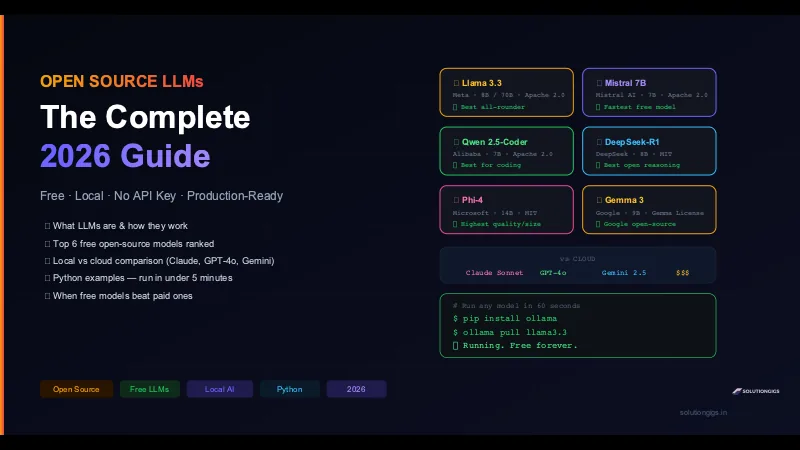
Best Open Source LLMs: Free Models Ranked
The best free open-source LLMs of 2026, ranked: Llama 3.3, Qwen 2.5-Coder, DeepSeek-R1, Phi-4, Mistral & Gemma — with Python examples and when they beat GPT-4o.
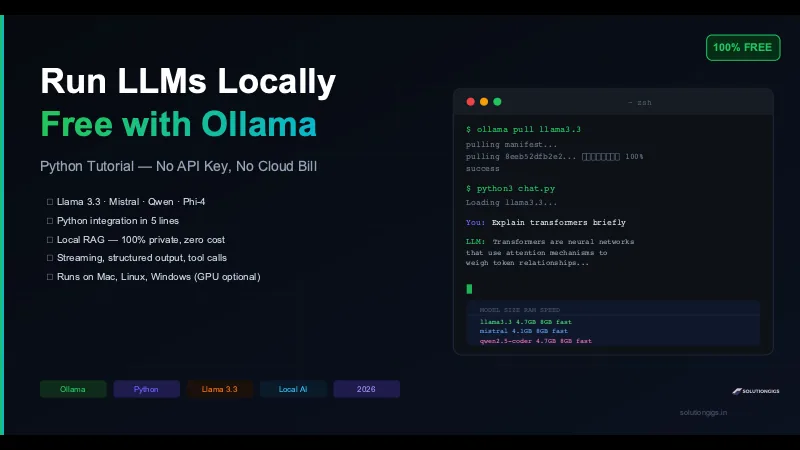
Ollama Tutorial: Run LLMs Locally for Free — Python Guide
Run Llama 3.3, Mistral, Qwen 2.5, and 100+ open-source LLMs on your own machine for free with Ollama. Full Python tutorial — streaming, structured output, local RAG, and tool calling. No API key needed.
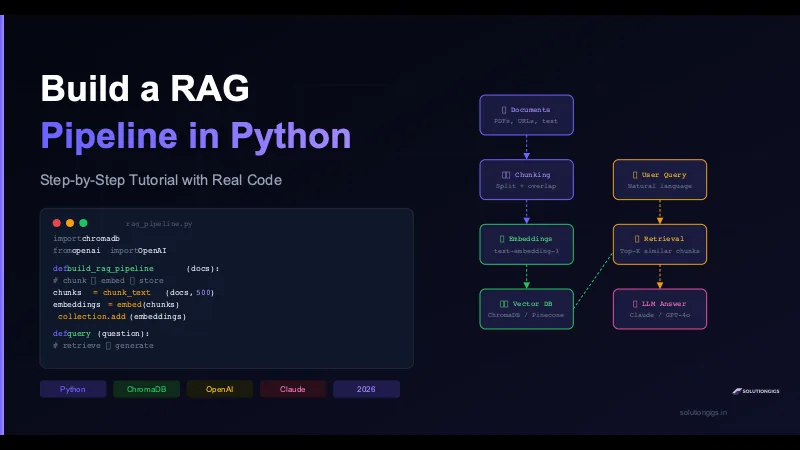
Build a RAG Pipeline in Python: Step-by-Step Tutorial
Build a RAG pipeline in Python from scratch — chunk documents, create embeddings, store in ChromaDB, and generate grounded answers with GPT-4o or Claude. Full working code, common mistakes, and production upgrades.
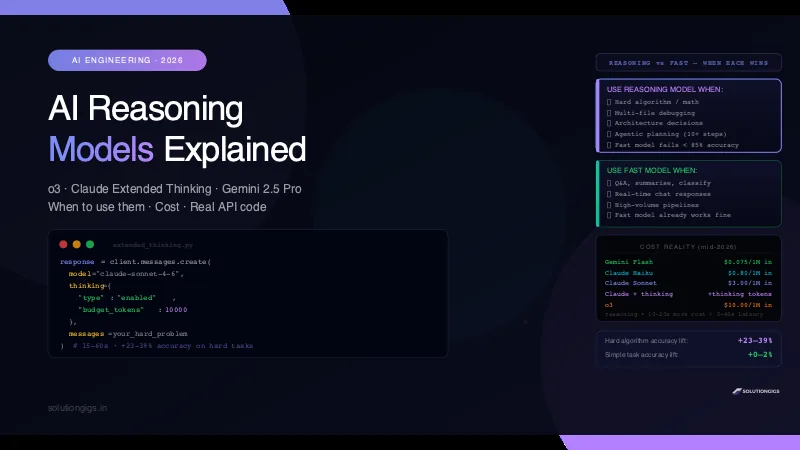
AI Reasoning Models Explained: When to Use Them
o3, Claude extended thinking, Gemini 2.5 Pro thinking mode — what AI reasoning models actually do, when they beat fast models by 23–39% accuracy, when they're overkill, real API code, and a decision framework for production.
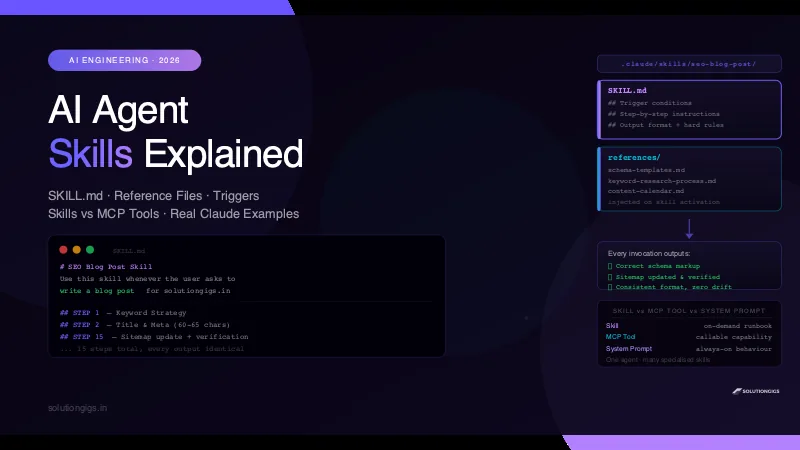
AI Agent Skills Explained: Build Reusable Claude Skills
AI agent skills turn good one-off AI interactions into repeatable systems. Learn what skills are, how Claude Code loads SKILL.md files, how to write your own skill with reference files, and when to use skills vs MCP tools vs system prompts — with real examples.
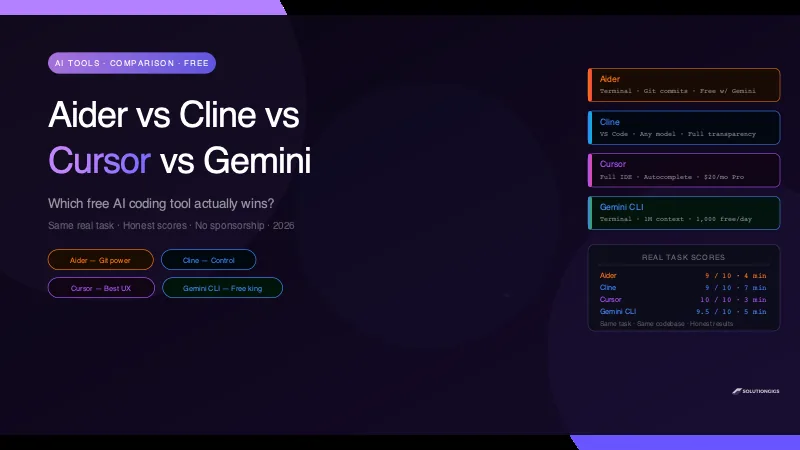
Aider vs Cline vs Cursor vs Gemini CLI: Which Free AI Coding Tool Wins?
I gave Aider, Cline, Cursor, and Gemini CLI the exact same real task and scored them on speed, quality, cost, and ease of setup. Honest results — no sponsorship, including where each tool breaks.
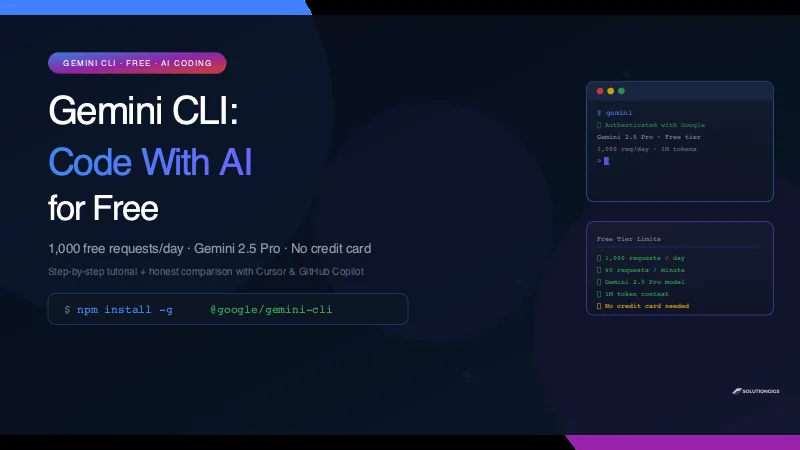
Gemini CLI Tutorial — Code With AI Free (1,000 Requests/Day)
Gemini CLI gives you Gemini 2.5 Pro in your terminal — 1,000 free requests per day, no credit card. Install in 5 minutes, use it on a real codebase, and see an honest comparison with Cursor and GitHub Copilot.
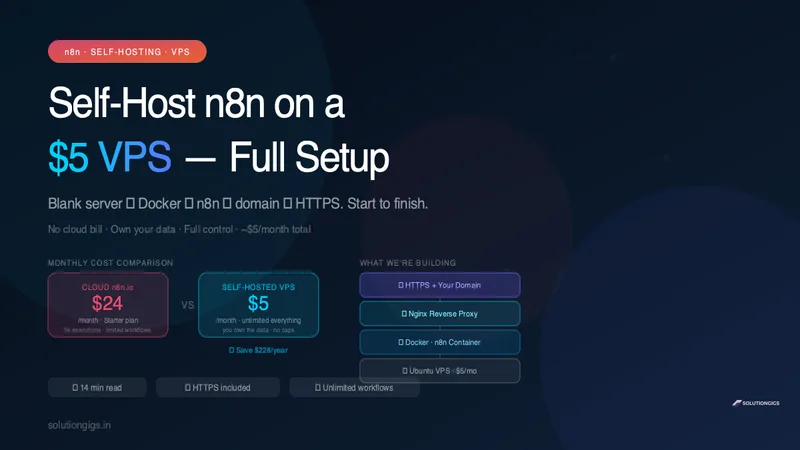
Self-Host n8n on a $5 VPS — Full Setup, Start to Finish
Blank Ubuntu VPS to a secured, production-ready n8n instance with Docker, Nginx, and HTTPS — for about $5/month. Includes firewall setup, auto-start on reboot, and a real cost breakdown vs cloud n8n.
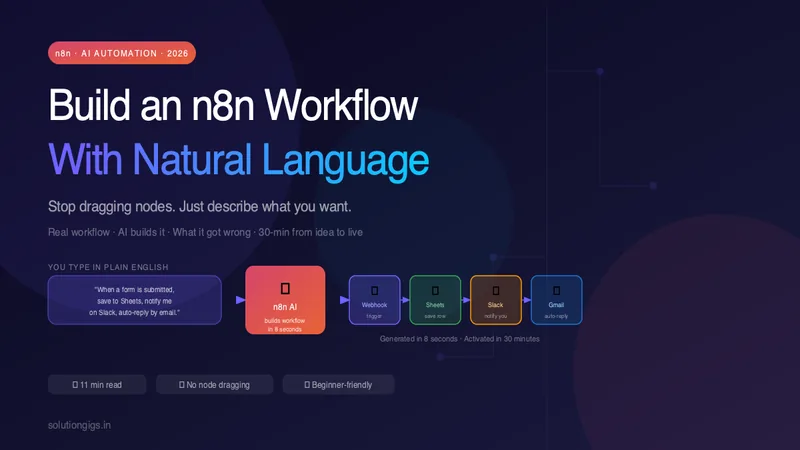
Build an n8n Workflow With Just Natural Language (n8n + AI)
Stop dragging nodes around. I describe a real automation in plain English, let n8n AI build it, show what it got wrong, and fix it live — from idea to a running workflow in under 30 minutes.
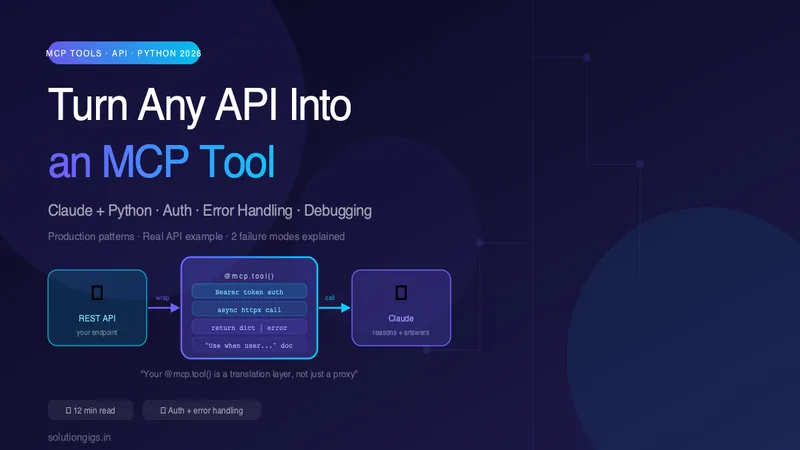
Turn Any API Into an MCP Tool: Claude + Python Tutorial
Got an existing API? Wrap it as an MCP tool so Claude can call it directly — real example with Bearer token auth, structured error returns, and the 2 failure modes that break most MCP servers in production.
HTML to MP4 — Convert Any Web Page or Animation to Video Free
Turn any HTML animation, CSS effect, or JavaScript visualization into a crisp MP4 video. Real Chromium rendering, up to 4K, 60 fps. No install, no watermark, no sign-up.
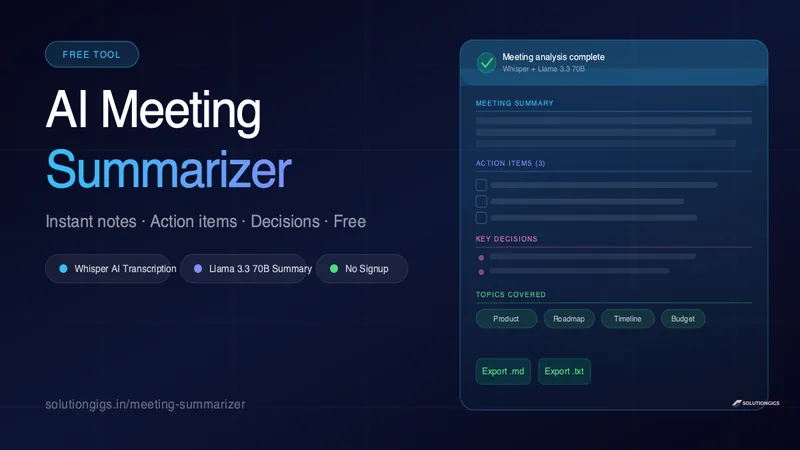
Free AI Meeting Summarizer — Action Items, Notes & Decisions
Turn any Zoom, Teams, or Meet recording into structured meeting notes in minutes. Get AI-generated summaries, action items, key decisions, and topics — free, no signup, powered by Whisper + Llama 3.3.
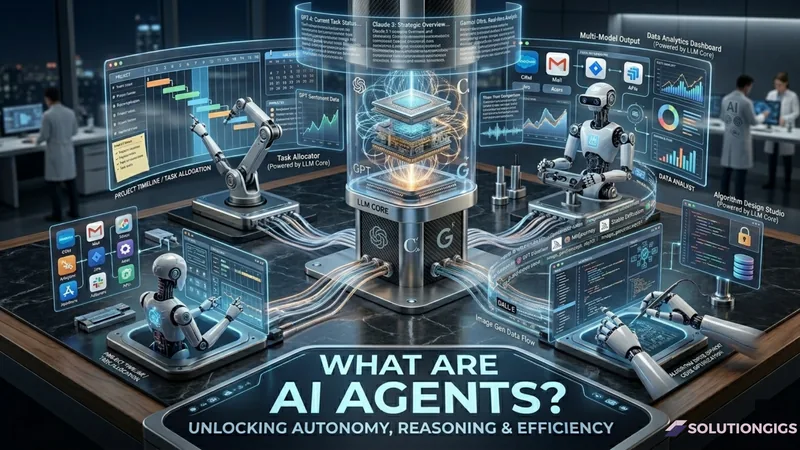
What Are AI Agents? Types, Intelligence & Rational Agents Explained
AI agents perceive their environment and take actions to reach goals. Discover the 5 types, rational agents, intelligent agents, logical agents, and more. Full 2026 guide.
What Does SaaS Stand For? Complete Guide to SaaS & DSL
SaaS stands for Software as a Service — cloud-hosted software you access in a browser, no install needed. Plus: what DSL stands for in internet, modems, and programming. Full breakdown with diagrams.
Free Scan to PDF Online — Better Than CamScanner (No Watermark)
Turn phone photos into crisp, professional PDFs with auto edge detection and perspective correction — completely free, no watermark, no sign-up. A better CamScanner alternative.
Free Cron Expression Tester — Validate & Decode Cron Jobs Online
Stop guessing your cron schedules. This free cron expression tester validates any cron syntax, shows the next 10 run times, and explains it in plain English — no login needed.
Free JWT Decoder Online — Inspect Header, Payload & Expiry
Decode any JSON Web Token instantly. Our free online JWT decoder shows header algorithm, all payload claims, expiry countdown, and issuer — no signup, works in your browser.
Free Regex Tester Online — Live Match, Groups & Replace
Test regular expressions instantly in your browser. Our free online regex tester highlights matches, shows capture groups, and previews replace output live — no signup.
Free SQL Formatter Online — Beautify & Minify SQL Queries
Format messy SQL instantly. Our free online SQL formatter beautifies, indents, and minifies SELECT, INSERT, UPDATE, and JOIN queries — no signup, works for MySQL, PostgreSQL, SQLite.
Free SSL Certificate Checker — Check Expiry, Issuer & SANs Online
Check any website's SSL certificate expiry date, issuer, Subject Alternative Names, and validity in seconds. Free online SSL checker — no login, instant results.
Free Readability Score Checker — Flesch-Kincaid & Grade Level Online
Measure how easy your writing is to read with our free Flesch-Kincaid readability checker. Get reading grade level, score, estimated reading time, and actionable tips — no signup.
Free Email Subject Line Tester — Score Open Rate & Avoid Spam
Test email subject lines before you send. Our free tester scores open-rate potential, flags spam trigger words, previews mobile inbox display, and suggests improvements — no signup.
Free OG Image Generator — Create Open Graph Images for Social Sharing
Generate beautiful Open Graph preview images for your blog posts, articles, or landing pages free online. Choose a template, customize colors, download PNG — no signup.
Free Color Palette Extractor from Image — Get HEX, RGB & HSL Online
Upload any photo and extract its dominant color palette instantly. Get HEX, RGB, and HSL codes for up to 20 colors. Free, runs in your browser, image never uploaded to servers.
Free Invoice Generator Online — Download PDF, No Login, No Watermark
Create and download professional invoices in seconds — completely free, no account, no watermark. Add line items, set tax and discount, and export to PDF with one click.
Resume Keyword Match Score: Check Your Resume Against Any Job Description
See exactly how well your resume matches a job posting with our free ATS checker. Get a keyword match percentage, list of missing skills, and actionable tips — no signup, runs in browser.
How to Auto Caption a Video Free Online — Subtitles, SRT & Animated Captions
Add word-by-word animated captions to any video automatically — free, no account, no watermark. Also auto generate SRT files for YouTube, Premiere Pro, and DaVinci Resolve.
How to Remove Background Noise from Audio — Free Online
Remove hiss, hum, fan noise, and HVAC noise from any audio file free online. No software, no account. Works on podcasts, Zoom recordings, voice memos, and interviews.
JSON to CSV Converter — Free Online, No Code Needed
Convert JSON arrays to CSV (or CSV back to JSON) online for free. No signup, no code, no limits. Works with any API export or database dump.
CSV to JSON Converter — Free Online, No Code Needed
Convert any CSV or spreadsheet export to a JSON array in seconds. Free online tool — no account, no code. Perfect for APIs, databases, and web apps.
XML to JSON Converter — Free Online Tool for Developers
Convert XML to JSON (or JSON to XML) online for free. Perfect for migrating from SOAP/XML APIs to REST/JSON, or importing legacy data into modern systems.
Excel to JSON & CSV Converter — Free Online, No Install
Convert Excel (.xlsx) files to JSON, CSV, or XML online for free. Also convert JSON/CSV back to Excel with styled headers. No account, no software needed.
Parquet to CSV Converter — Free Online, No Python Needed
Convert Parquet files to CSV online for free — no Python, no Spark, no code. Open Parquet files in Excel, Google Sheets, or any database with one click.
JSON Formatter & Prettifier — Free Online JSON Beautifier
Format, validate, minify, and fix broken JSON in your browser. Free online JSON formatter — no account, no server. Includes Fix JSON for repairing malformed JSON.
How to Transcribe Audio to Text for Free (MP3, M4A, WAV, Zoom, Podcasts)
Turn any audio or video recording into text in minutes using free Whisper AI. Works with MP3, M4A, WAV, Zoom recordings, podcast episodes, and more — no account needed.
How to Convert MP4 to MP3 Online – Free, No Sign-up
Want to extract audio from a video file? Learn how to convert any MP4 to high-quality MP3 in seconds — completely free, no software needed, no sign-up required.
MKV to MP4 Converter — Free Online, No Software Needed
Convert MKV to MP4 free online — play your videos on iPhone, Android, smart TVs, PlayStation, and Xbox. No software, no account. Fast remux with no quality loss.
MOV to MP4 Converter — Convert iPhone Videos Free Online
Convert MOV videos to MP4 online for free. Upload iPhone or Mac QuickTime recordings and get a universally compatible MP4 — no software, no account, instant download.
MP4 to GIF Converter — Free Online Video to GIF Tool
Convert MP4 clips to animated GIF free online. Perfect for Slack reactions, GitHub READMEs, Twitter posts, and product demos. No software, no watermarks.
JPG to PNG Converter — Free Online, Lossless Output
Convert JPG images to PNG online for free. Get lossless PNG with transparency support — perfect for logos, screenshots, and web graphics. No account, instant download.
JPG to WebP Converter — Reduce Image Size for Faster Websites
Convert JPG images to WebP online free. WebP is 25–35% smaller than JPG at the same quality — perfect for improving your website's PageSpeed score. No account needed.
M4A to MP3 Converter — Convert iPhone Audio Free Online
Convert M4A files to MP3 online for free. Works with iPhone voice memos, GarageBand exports, and iTunes downloads. No software, no account, universal compatibility.
WAV to MP3 Converter — Free Online, Choose Your Bitrate
Convert WAV audio files to MP3 online for free. Choose bitrate (128/192/320 kbps), reduce file size by 10×, and keep great quality. Perfect for podcasts and music.
WebP vs PNG vs JPG: Which Image Format Should You Use?
Not sure whether to use WebP, PNG, or JPG? We break down file size, quality, transparency support and browser compatibility so you can pick the right format every time.
MP3 vs FLAC vs WAV: The Complete Audio Format Guide
MP3, FLAC, WAV, M4A, OGG — which audio format should you use? This guide covers quality, file size, compatibility and when to convert between them.